Google+ Mars Travel: Dunes on Mars
Showing posts with label Dunes on Mars. Show all posts

Mars Photo of the Day - Apr 22 2012

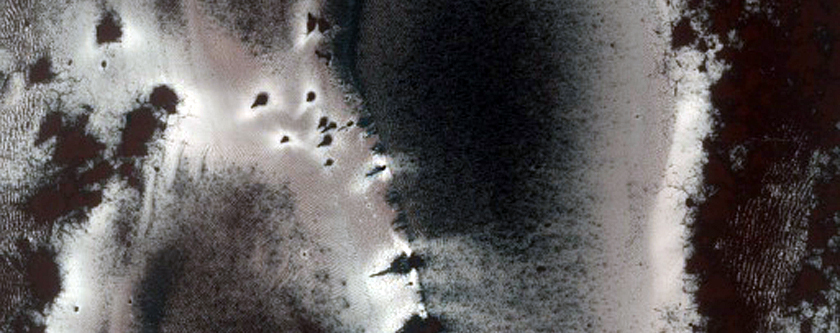
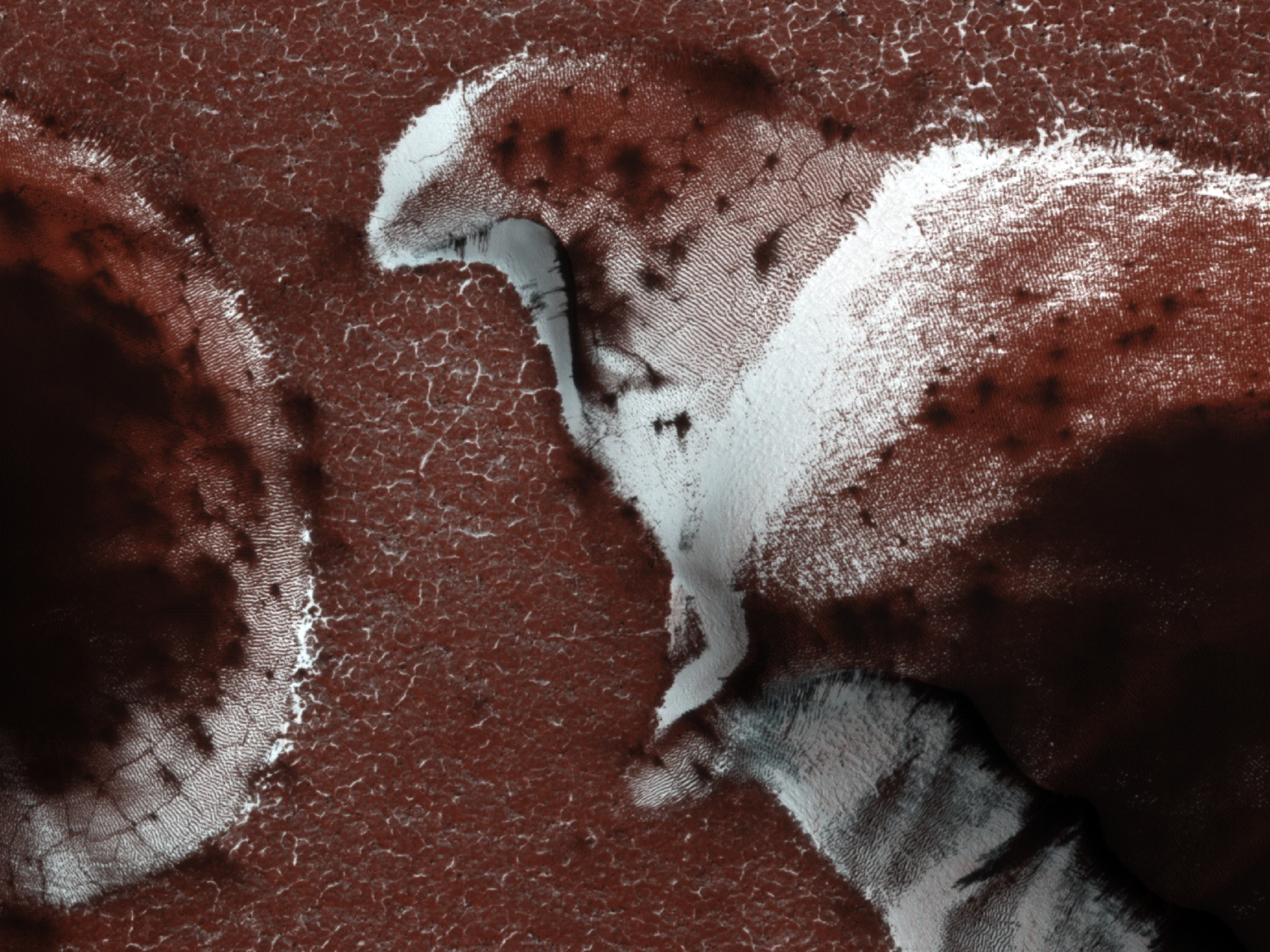
Today's Image of Mars comes from HiRISE shows defrosting dunes in the north polar region during late spring. The ice that you see is primarily carbon dioxide ice, which builds up over the winter months. During the spring the carbon dioxide ice begins to sublimate, turning directly from a solid into gas.

By the time this image was taken most of the ice had sublimated. As summer approaches more and more of the ice will sublimate, leaving only small patches, if that, but then when winter comes around the ice will begin to accumulate again! Thus is the never ending cycle in the north polar regions of Mars. 

Because there is such consistency on Mars scientists study the differences in the dunes each year to determine what processes, if any are still active on Mars. Click on this image to be taken to the original high resolution image. [See the HiRISE caption for this image]
Mars Photo of the Day - Mar 30 2012

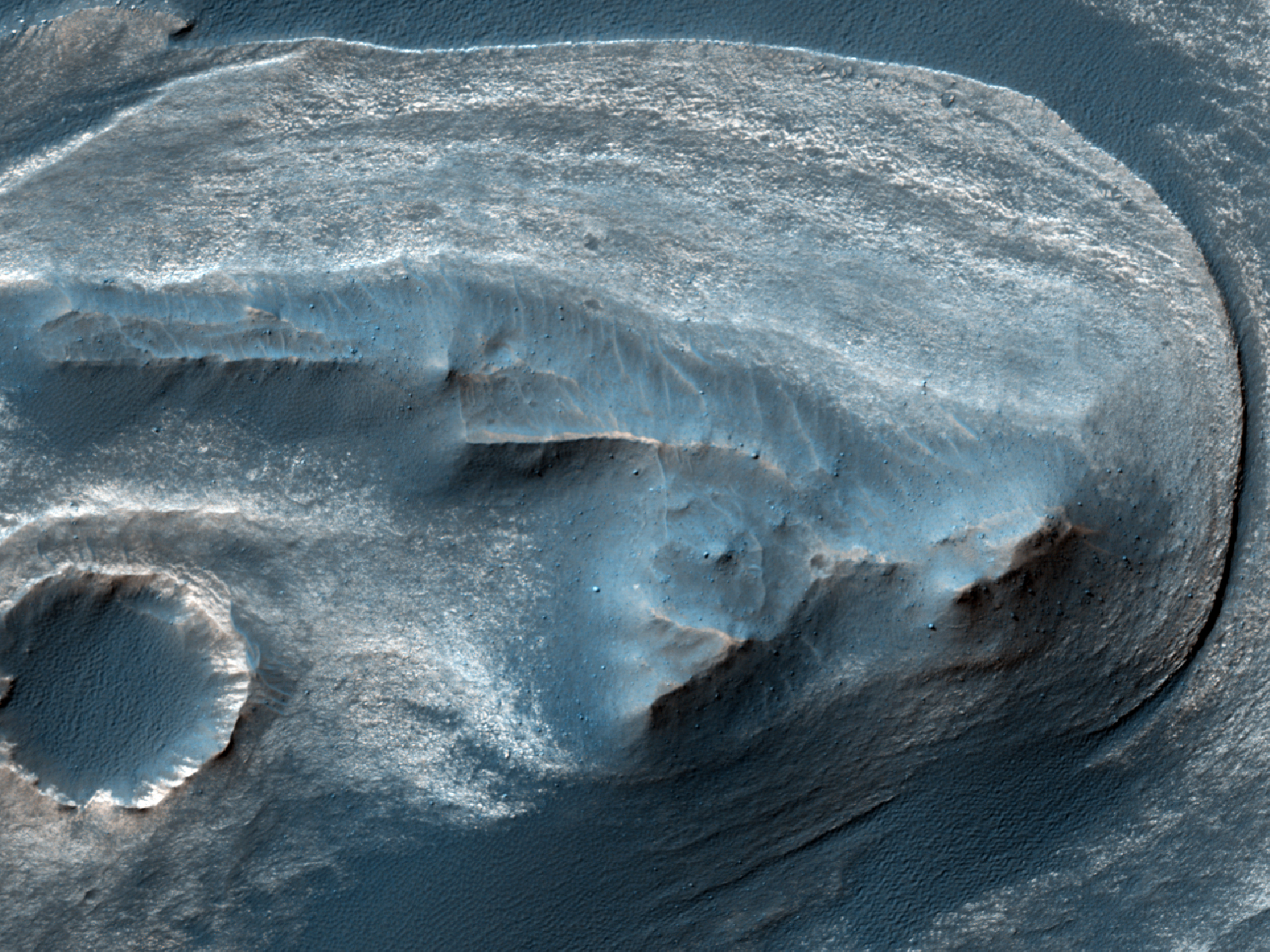
Today's Image of Mars comes from HiRISE shows a dune that lies close to an impact crater. This dune is special because it preserves the original bedform shapes of the sand dune, but lies over top of a previously eroded surface of sedimentary rock. 

Scientists are still attempting to find a dune that has been directly impacted by an asteroid, in hopes that it will help them better understand dunes and how they are formed.

Click on the image to view it in high resolution.  [See the original HiRISE caption for the image]


Mars Photo of the Day - Mar 25 2012

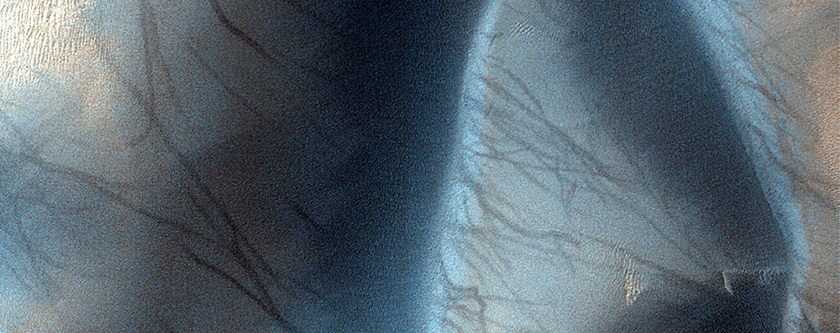
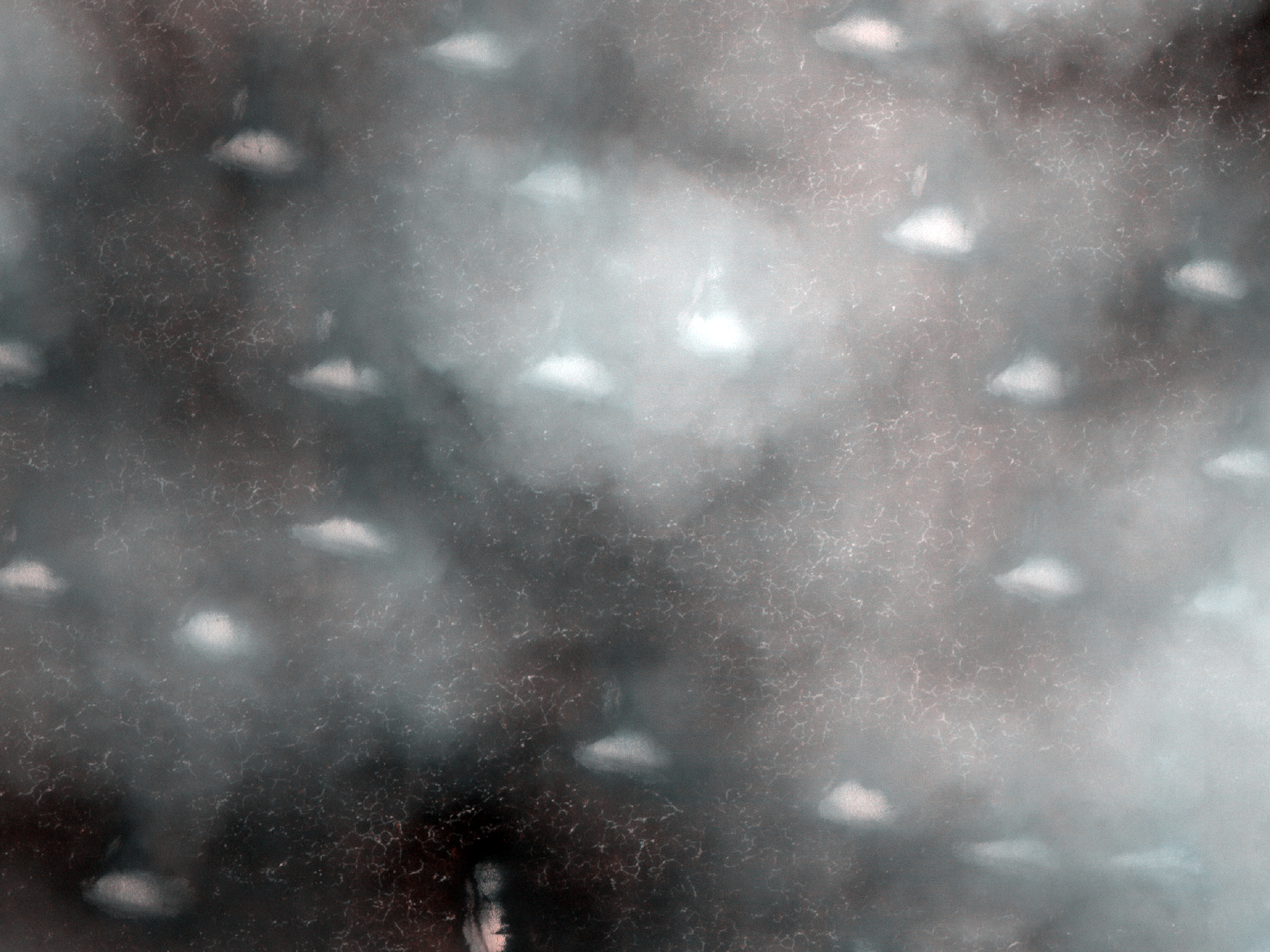
Today's Image of Mars was taken by HiRISE in an attempt to image ice covered dunes, but it turned out that area was slightly overcast!

Just like here on Earth there are clouds on Mars! These are fairly thin clouds, so we can still make out the ice covered dunes below. The clouds are likely made up of tiny carbon dioxide ice particles, but occasionally they can be made up of tiny water particles! Unfortunately that doesn't mean that it rains on Mars, but scientists have determined that it does snow! The only problem is that they have never seen the snow touch the ground, so it can't be easily used as water by future explorers!

Clicking on this image will take you to the original high resolution image from HiRISE. Check it out!


Mars Photo of the Day - Feb 25 2012

Today's Image of Mars was taken by HiRISE to determine if there was a crater present on the dune. As of 2011 scientists have yet to find a dune with a crater on Mars. This leads them to believe that dunes are recently developed features, since older features generally have craters.

This particular dune was imaged in the southern hemisphere during late fall, so frost has begun to accumulate.  To better see this you should check out the high resolution version of this image. Clicking on this image will take you to the caption from HiRISE.


Mars Photo of the Day - Feb 1 2012

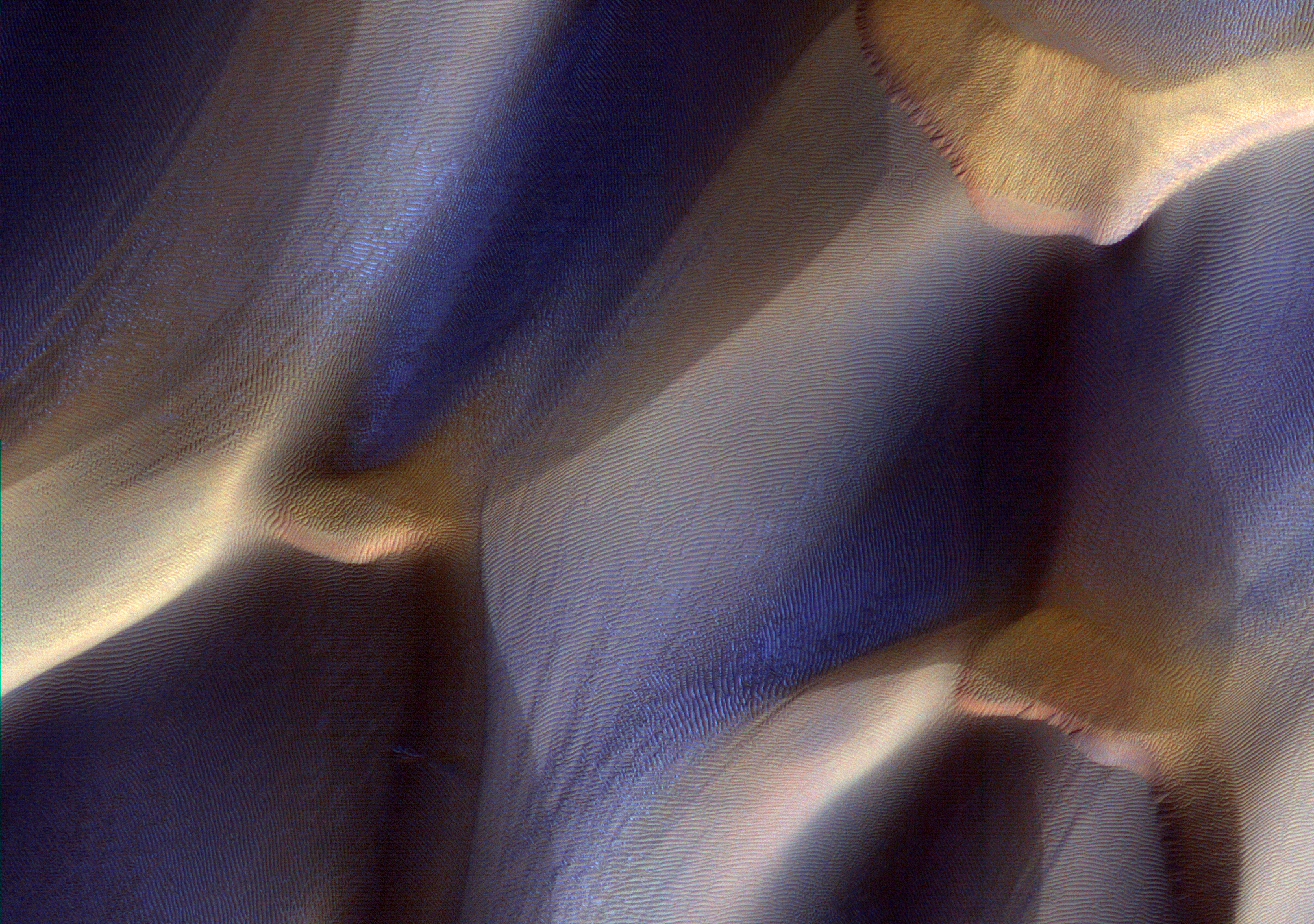
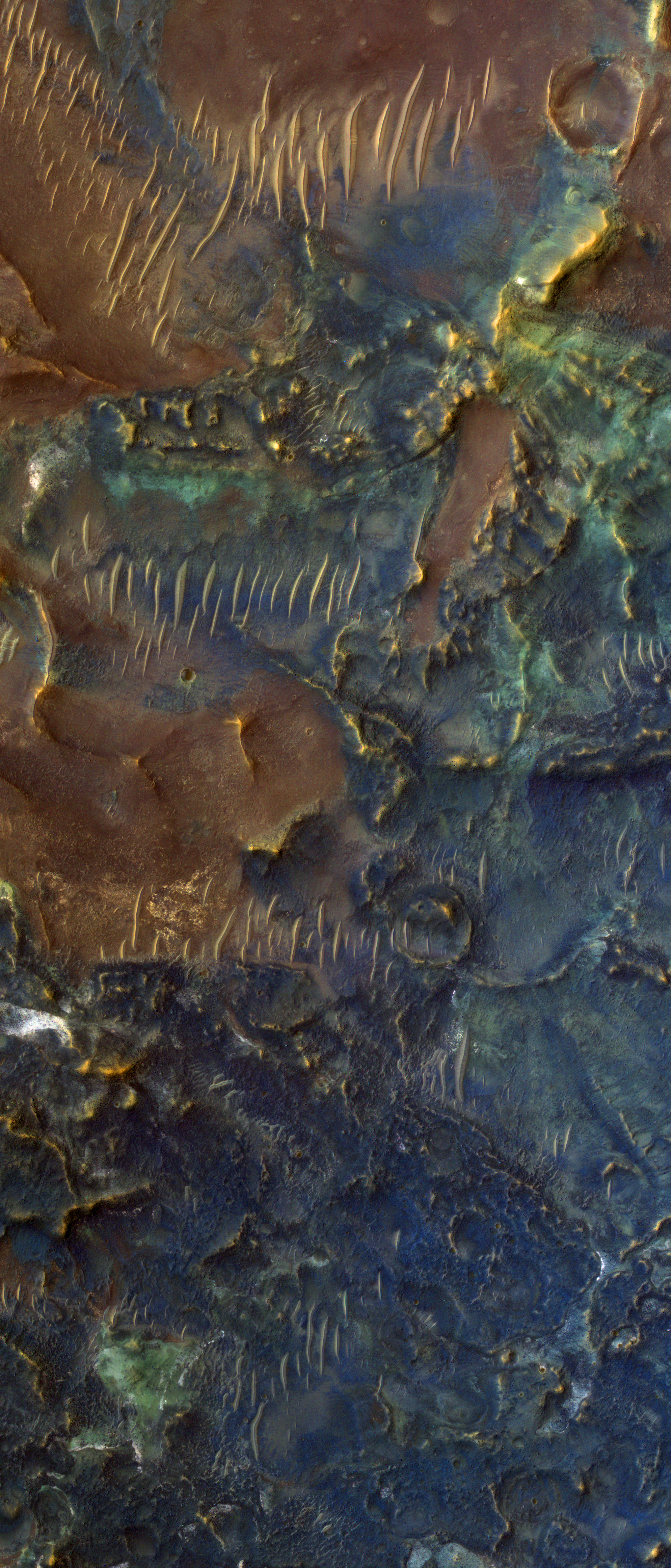
Today's Image of Mars shows the floor of Toro Crater, a 42km diameter crater in Syrtis Major, which exhibits phenomenal colors due to the different minerals within the crater.

The north-south oriented features are dunes crafted by the wind; they are much younger than the bedrock on which they lie. Scientists can determine the direction and strength of the wind in the crater by analyzing dune orientation and size.

Scientists speculate that Toro Crater experienced hydrothermal alteration, which is caused by the interaction of materials with water and heat. The blue and green colors are unaltered minerals like pyroxene and olivine, whereas the warmer colors are indicative of alteration in clays and other materials.

Toro Crater is of great interest to scientists because hydrothermal interactions are indicative of an environment hospitable to life. Because of this we may find that Toro Crater becomes the destination for a future mission to Mars!

Clicking on this image will take you to the original subimage from HiRISE. [See their captioned image]


Mars Photo of the Day - Jan 31 2012

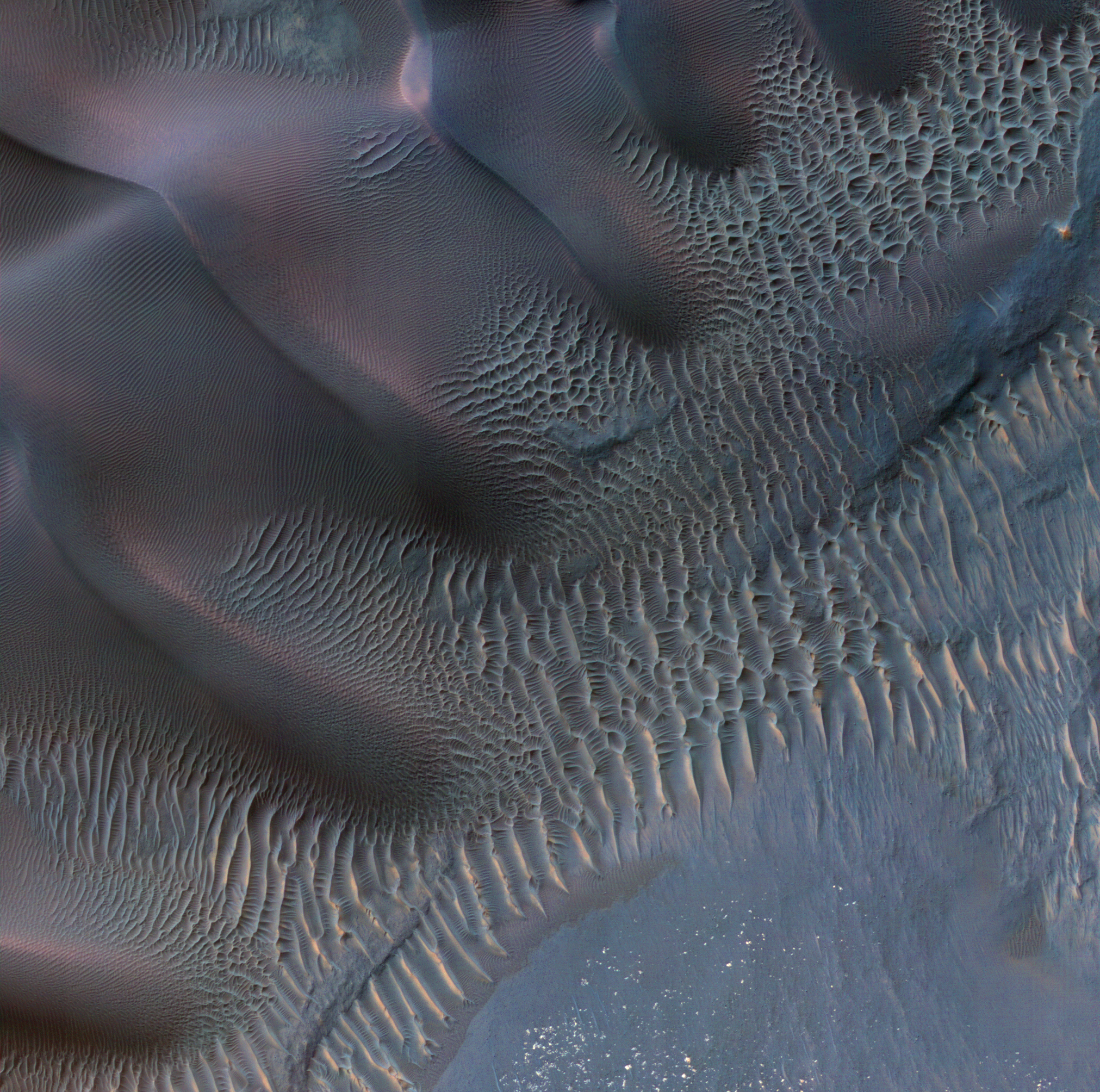
Today's Image of Mars shows dunes and sand ripples of varying sizes within an impact crater in Noachis Terra. These dunes are a perfect representation of the natural beauty on Mars. 

Because dunes are shaped by the wind, their orientation helps scientists to determine the wind's direction and strength in the imaged area. This can help scientists when they are planning future missions to Mars and need to be wary of all environmental factors. 

Clicking on this image will take you to the original high-resolution image from HiRISE. [See the captioned image]

Mars Photo of the Day - Dec 21 2011

Today's Image of Mars shows part of a dune field found within Proctor Crater. Proctor Crater is approximately 150km in diameter and lies in the Southern Highlands of Mars.

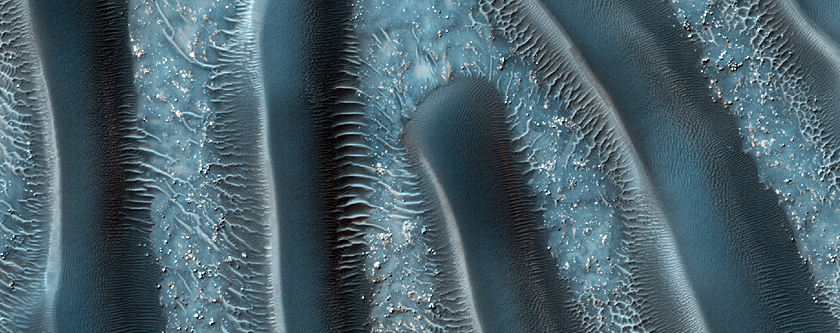
The dark dunes seen in this image are made up of basaltic sand which has collected at the bottom of Proctor Crater. On top of these large dunes lie smaller secondary dunes consistent with terrestrial dunes of similar size.

In this image you can see that between the large, dark dunes lie smaller, brighter formations. It's been suggested that these are smaller dunes or granule ripples composed of material that is different from the larger dunes. The large, dark dunes overly the the smaller, brighter features, implying that they are a more recent addition to the crater.

Both the large and small features were formed through wind erosion. We can see in this image that the orientation of the smaller features was affected by the placement of the larger dunes.This is because wind must flow around the larger dunes.

HiRISE continues monitoring Proctor Crater to determine whether the dunes are still active today. Clicking on this image will take you to a similar, captioned HiRISE image of dunes in Proctor Crater.


Mars Photo of the Day - Dec 17 2011

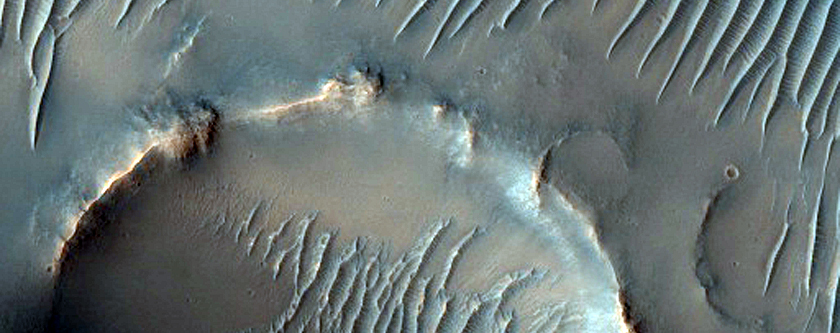
Today's Image of Mars shows a partially exhumed crater in Evros Vallis.

What exactly is an 'exhumed' crater?

An exhumed crater is one that formed a long time ago, but was subsequently buried. It becomes re-exposed because the materials that originally filled and covered it start to erode. This is because oftentimes the materials that fill a crater are less wear resistant than the surrounding terrain, making them easier to erode.

In this image you can see many different dunes surrounding and even in the crater. Evros Vallis is full of these dunes. What do these dunes tell us?

Well if you look at this image you can see that not all the dunes have the same orientation. Since Martian dunes are created almost entirely from wind they are generally oriented the in the direction the wind was blowing. Because these dunes and others like them in Evros Vallis have different orientations we can tell that  different 'wind regimes' were involved in the creation of the dunes. A 'wind regime' simply refers to the a pattern in the regularly flow and direction of the wind.

This image was taken by HiRISE. If you click on it you you will be taken to the original captioned image from them.


Mars Photo of the Day - Dec 15 2011

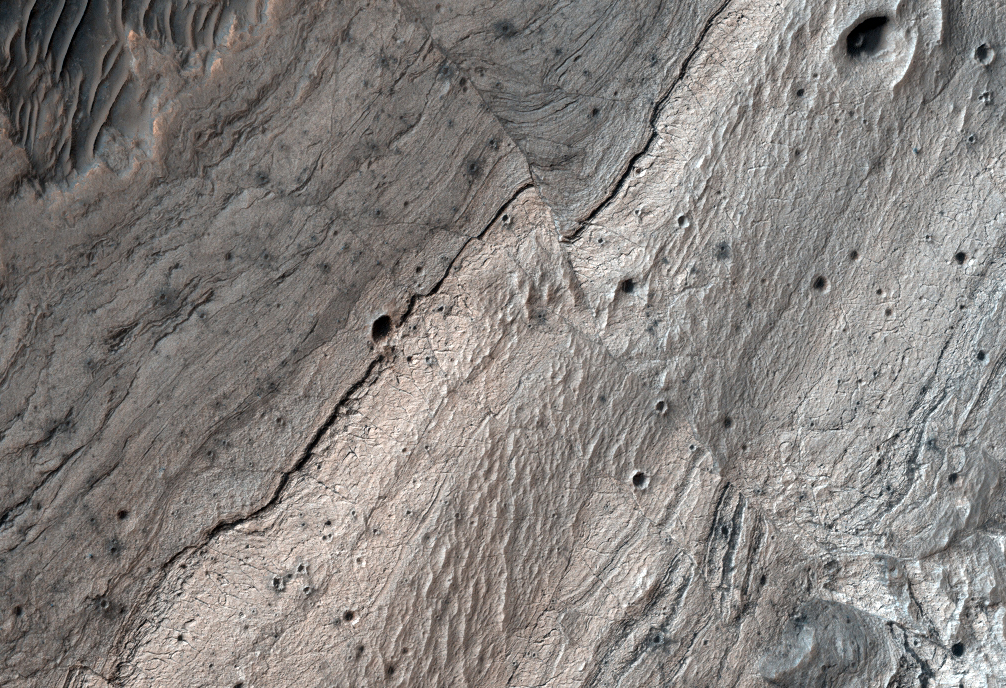
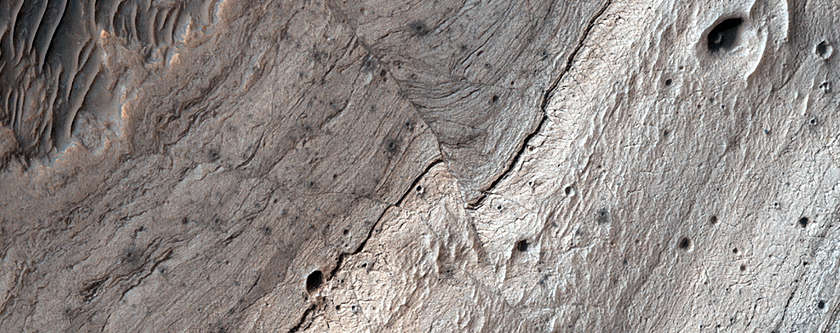
Today's Image of Mars is of faults in Ius Chasma, one of many deep depressions in Valles Marineris, the solar system's largest known canyon. Ius Chasma is about 900km long and 8-10km deep. The chasma is divided by an east-west ridge called Geryon Montes.

The floor of Ius Chasma is comprised of layered deposits, but due to excessive faulting the deposits have become jumbled. The dark spots you see in this image are the result of ejecta from impacts. They have exposed a layer underlying the lighter surface area. Scientists speculate that the darker layer being exposed is basalt. 

If you look closely you can also see many linear dunes, which are prominent all throughout Ius Chasma. These dunes have a north-south orientation, which is indicative of prevailing westerly winds through the canyon.
Clicking on this image will take you to the original captioned image from HiRISE.


If you like the HiRISE images showcased in the Mars Photo of the Day posts I encourage you to enter for a free 2012 HiRISE Calendar

Mars Photo of the Day - Dec 6 2012

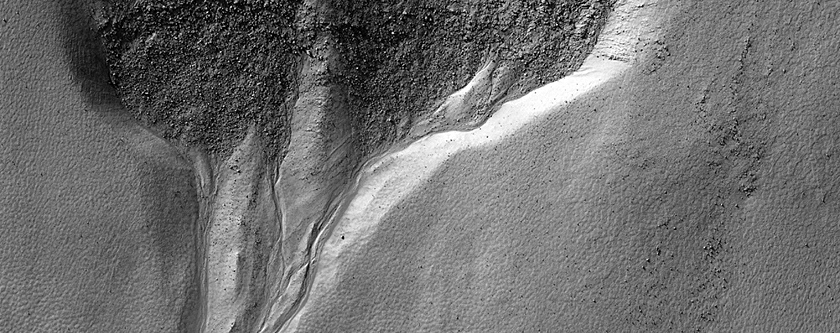
Today's Image of Mars shows defrosting dunes and gullies during late summer in Mars' southern hemisphere. Mars Reconnaissance Orbiter's HiRISE monitors defrosting sites in hopes of learning about the defrosting process on Mars. It might sound mundane, but this knowledge may one day help explorers survive by helping them to follow one of the many gullies on Mars to its source. One of the primary needs of explorers will be water and being able to find it if no satellite coverage is available could mean the difference between life and death.

Clicking on this image will take you to the original captioned image from HiRISE.


Mars Photo of the Day - Nov 13 2011

Today's Image of Mars shows a portion of the dunes in Richardson Crater, a 55km diameter crater in the south polar region of Mars. This image was taken as the dunes began to thaw and the carbon dioxide ice started to sublimate. You can see this in the dark patches where the ice has already sublimated. 

This image was taken in 2009 by HiRISE aboard the Mars Reconnaissance Orbiter. Click image to see the original captioned image.


Mars Photo of the Day - Oct 19 2011

Today's Image of Mars shows some stunning sand dunes. The ridges on these dunes resemble thousands of legs and create the illusion that we are seeing millipedes, thus the reason HiRISE labeled this image "The Millipedes of Mars?"
Unfortunately I haven't been able to find much information about these particular dunes, but the placement nnd quantity of ridges you see do make for a fascinating image don't they?

To see the captioned image from HiRISE simply click on this image.


Mars Photo of the Day - Oct 5 2011

Today's Image of Mars is of the amazing dunes found in Richardson Crater. Richardson Crater is located in the south polar region of Mars, where it goes through dramatic temperature changes throughout the year. The dark streaks are due to the movement of material as a result of wind and defrosting. 

These dunes are just another example of the remarkable landscapes to be found on Mars.

This image links to the original captioned image by HiRISE.