Google+ Mars Travel: South Polar Region of Mars
Showing posts with label South Polar Region of Mars. Show all posts

Cone-Shaped Hill on Mars

In the South Polar Region of Mars' Promethei Lingula there is an unusual cone shaped hill, measuring about 20-30 meters high. The white streaks are areas where carbon dioxide ice has not yet thawed. The unusual shape of this hill can likely be attributed to large scale erosion. Scientists still aren't sure why the area wasn't eroded evenly, but as they study more images of features like this they will gain a better understanding of the environment that created them.
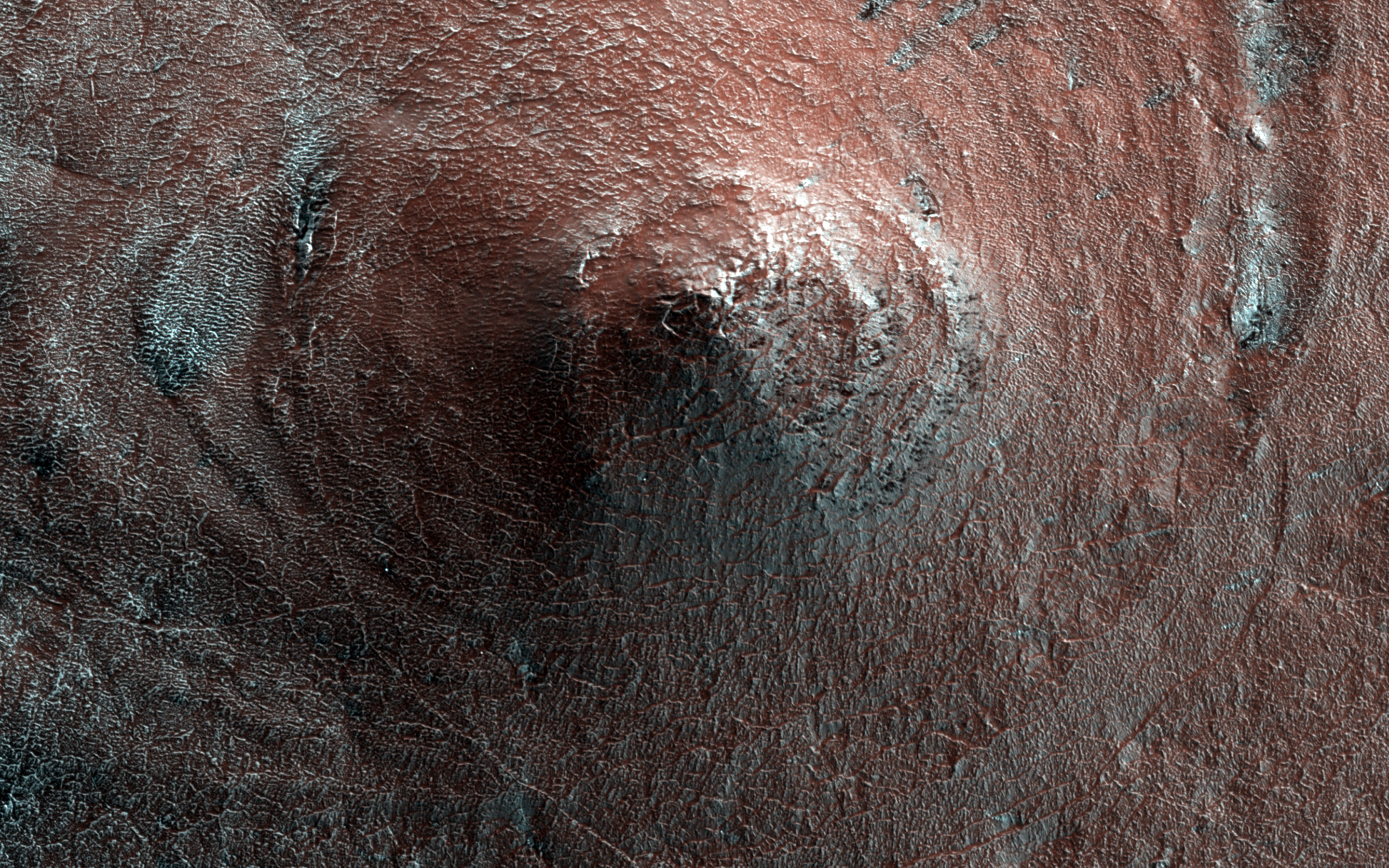
Click to see HiRISE's original high resolution version. [See HiRISE caption]


One possible way this cone-shaped hill was created would have occurred long ago, when it once rained on Mars. A meteor could have hit the area, creating a crater, which would eventually developed a central uplift. After millions of years of rainfall the central uplift would have been smoothed out to what we see above, as the water flowed down its slopes. Over millions of years the distinguishing characteristics of the surrounding crater would have been washed away by the rain, blending it into the regional terrain. That's just a theory and an example of the fact that we may never know what caused this feature on Mars to develop.
Mars Photo of the Day - Dec 30 2011

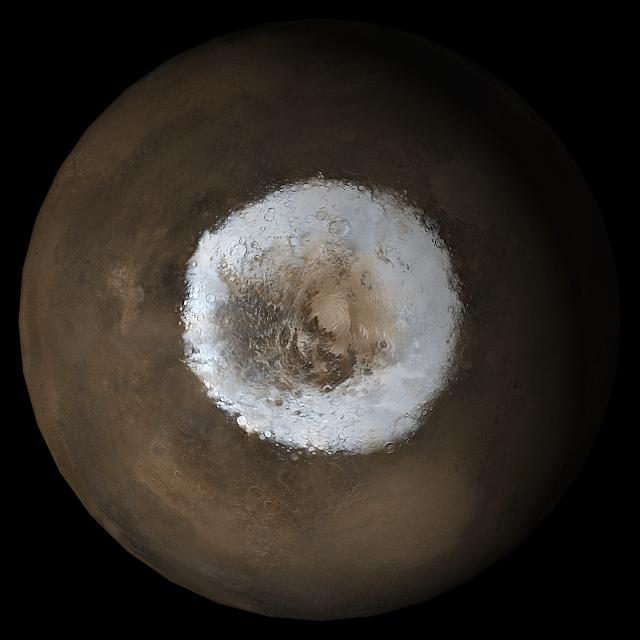
Today's Image of Mars show the South polar cap in early Spring as taken in May 2005. This image is a mosaic of images taken by the Mars Global Surveyor. A lot of this ice is carbon dioxide ice, but with an underlying layer of water ice. By this time the carbon dioxide ice has likely begun sublimating, since the temperatures have begun rising and carbon dioxide ice begins sublimating at temperatures greater than -78.5°C (197.5 K, −104.2 °F).

Clicking on this image will take you to the original Mars Global Surveyor gallery where this image is located.

Source: NASA/JPL/Malin Space Science Systems

Mars Photo of the Day - Dec 28 2011

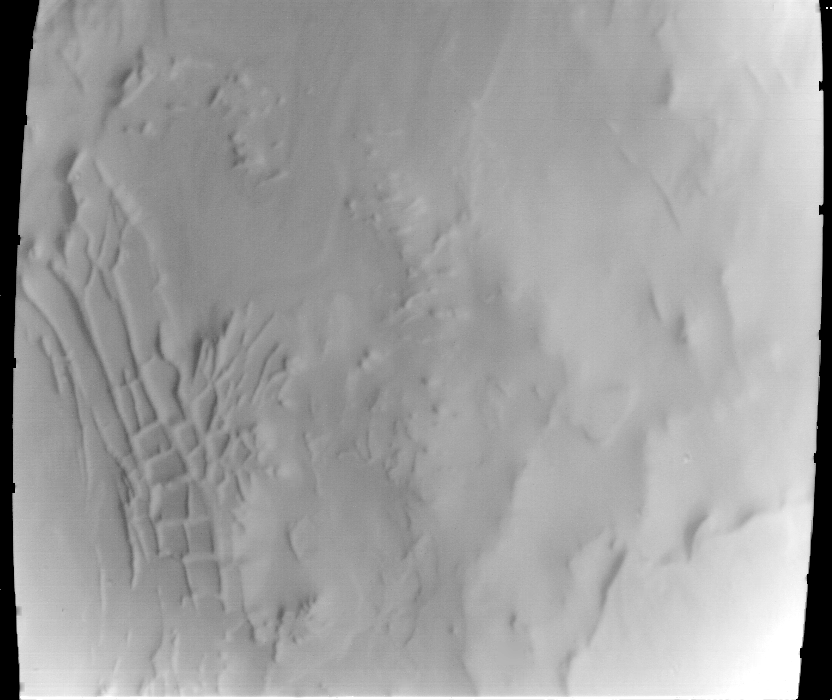
Today's Image of Mars shows Inca City, a set of intersecting ridges forming rectangular shapes in the South Polar Region of Mars. These ridges are part of a larger circular structure that is approximately 86km in diameter. While conspiracy theorists might believe this really was a city, scientists have more plausible, scientific explanations for why how these formations came to be.

Inca City was likely formed when an ancient impact crater was filled in and covered, only to later become exhumed. Cracks that existed in the crater were filled in with the rest of it and what we see here could be those reexposed fractures. This could happen if the material that covered the crater was less wear-resistant than the underlying surface. This is the exact opposite of how an inverted riverbed forms. While these explanations seem likely, scientists are not certain what created the features you see below.

This image was taken by Mariner 9 in 1972. Clicking on the image will take you to the Mars Global Surveyor Page for the image.

Mars Photo of the Day - Dec 25 2011

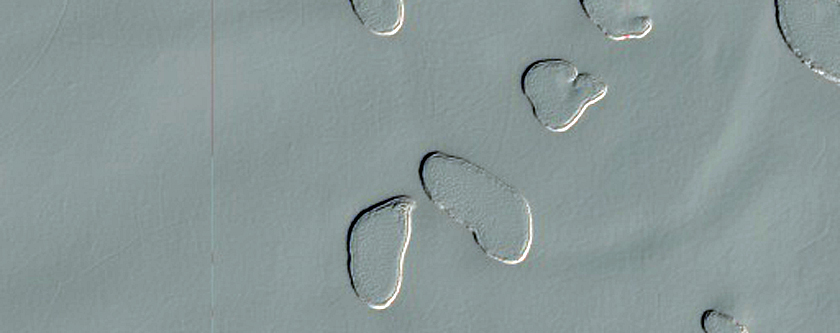
Today's Image of Mars shows 'swiss cheese' terrain in the South Polar residual caps on Mars. Just like on Earth, Mars has water ice at its poles, but because Mars is much colder carbon dioxide ice is deposited during the winter and sublimates when the climate gets warmer come Spring. This is similar to water ice snow on Earth which typically appears during the winter season and melts during the Spring. 

In this image the carbon dioxide ice has already begun sublimating, but only in patches, thus the 'swiss cheese' like terrain. The reason why the exposed terrain is so flat is likely due to a layer of water ice that exists under the carbon dioxide ice. Because water ice has a higher freezing point than carbon dioxide ice it remains solid when the temperatures increase in the spring.

Today is Christmas for those that take part, so here is to hoping that your Christmas is as white as this image on Mars!

Clicking on this image will take you to the original, captioned HiRISE image.


If you like the HiRISE images showcased in the Mars Photo of the Day posts I encourage you to enter for a free 2012 HiRISE Calendar

Mars Photo of the Day - Nov 13 2011

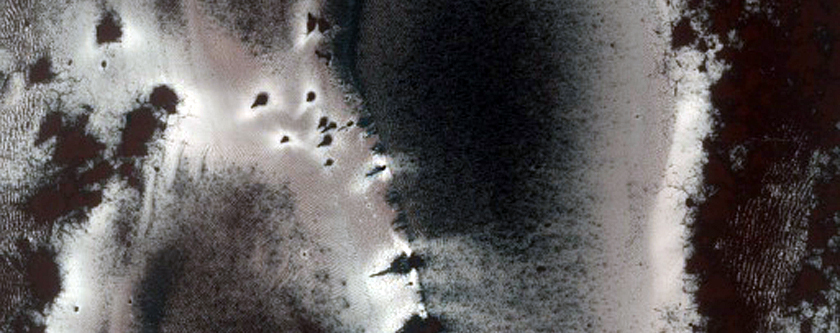
Today's Image of Mars shows a portion of the dunes in Richardson Crater, a 55km diameter crater in the south polar region of Mars. This image was taken as the dunes began to thaw and the carbon dioxide ice started to sublimate. You can see this in the dark patches where the ice has already sublimated. 

This image was taken in 2009 by HiRISE aboard the Mars Reconnaissance Orbiter. Click image to see the original captioned image.


Mars Photo of the Day - Nov 8 2011

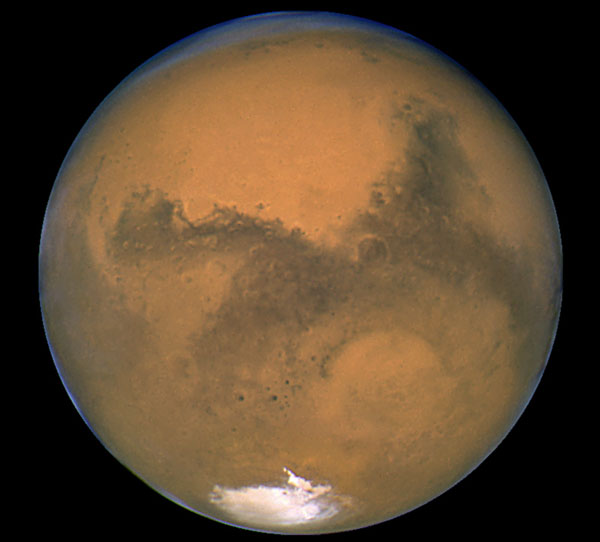
Today's Image of Mars is one of the most well known images of Mars. It was taken by the Hubble Telescope on August 27 2003. You can see the clearly defined south polar ice cap, as well as many other features. This is the most detailed view of Mars ever taken from Earth. 

I suggest that you click on the image because it links to the NASA page, which provides much more detail.

I would provide more detail here, but I am at NASA Langley for the #NASATweetup and don't really have time.


Mars Photo of the Day - Oct 10 2011

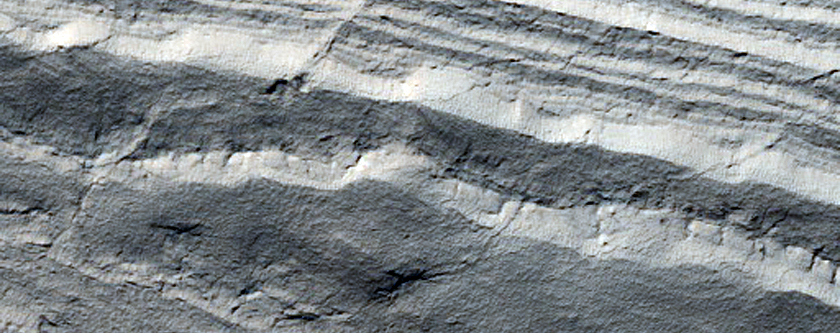
Today's Image of Mars is of layered deposits in the southern polar regions of Mars. This images clearly shows how drastically the layers can differ from each other in appearance. The changes in color and content of deposits generally reflects changes in the climate on Mars during the time of deposit.

This image links to the original image from HiRISE, but they do not currently provide a caption.


Mars Photo of the Day - Oct 5 2011

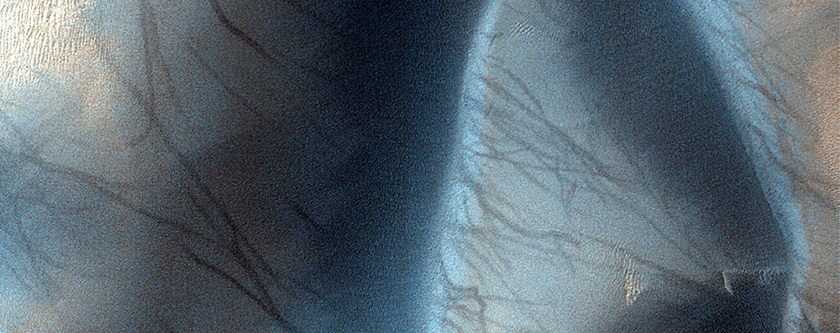
Today's Image of Mars is of the amazing dunes found in Richardson Crater. Richardson Crater is located in the south polar region of Mars, where it goes through dramatic temperature changes throughout the year. The dark streaks are due to the movement of material as a result of wind and defrosting. 

These dunes are just another example of the remarkable landscapes to be found on Mars.

This image links to the original captioned image by HiRISE.