Google+ Mars Travel: minerals
Showing posts with label minerals. Show all posts

Mars Photo of the Day - Mar 31 2012

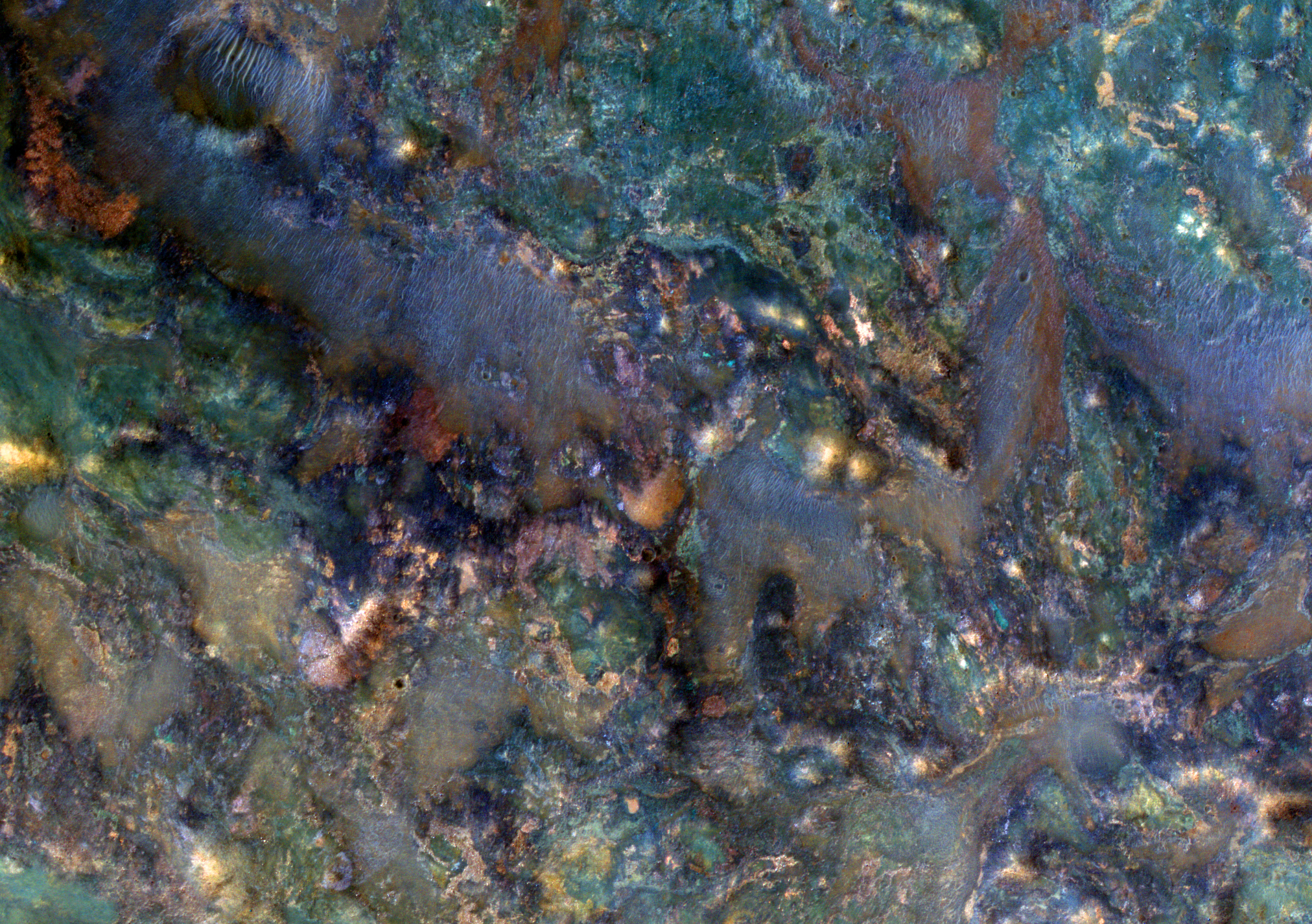
Today's Image of Mars shows some amazingly colorful minerals and rocks found in Nili Fossae by HiRISE. The stunning array of colored rocks are the ejecta from an impact that broke up and expelled already diverse types of rock, mixing them up even more. Each different color seen below is representative of a different mineral. 

There is a wealth of information about the past of the Martian climate that could be gathered by examining each of these minerals, so it may be that one day a mission is sent to Nili Fossae to do just that! Clicking on this image will take you to the original high resolution image from HiRISE. [See their caption for the image]
Mars Photo of the Day - Mar 22 2012

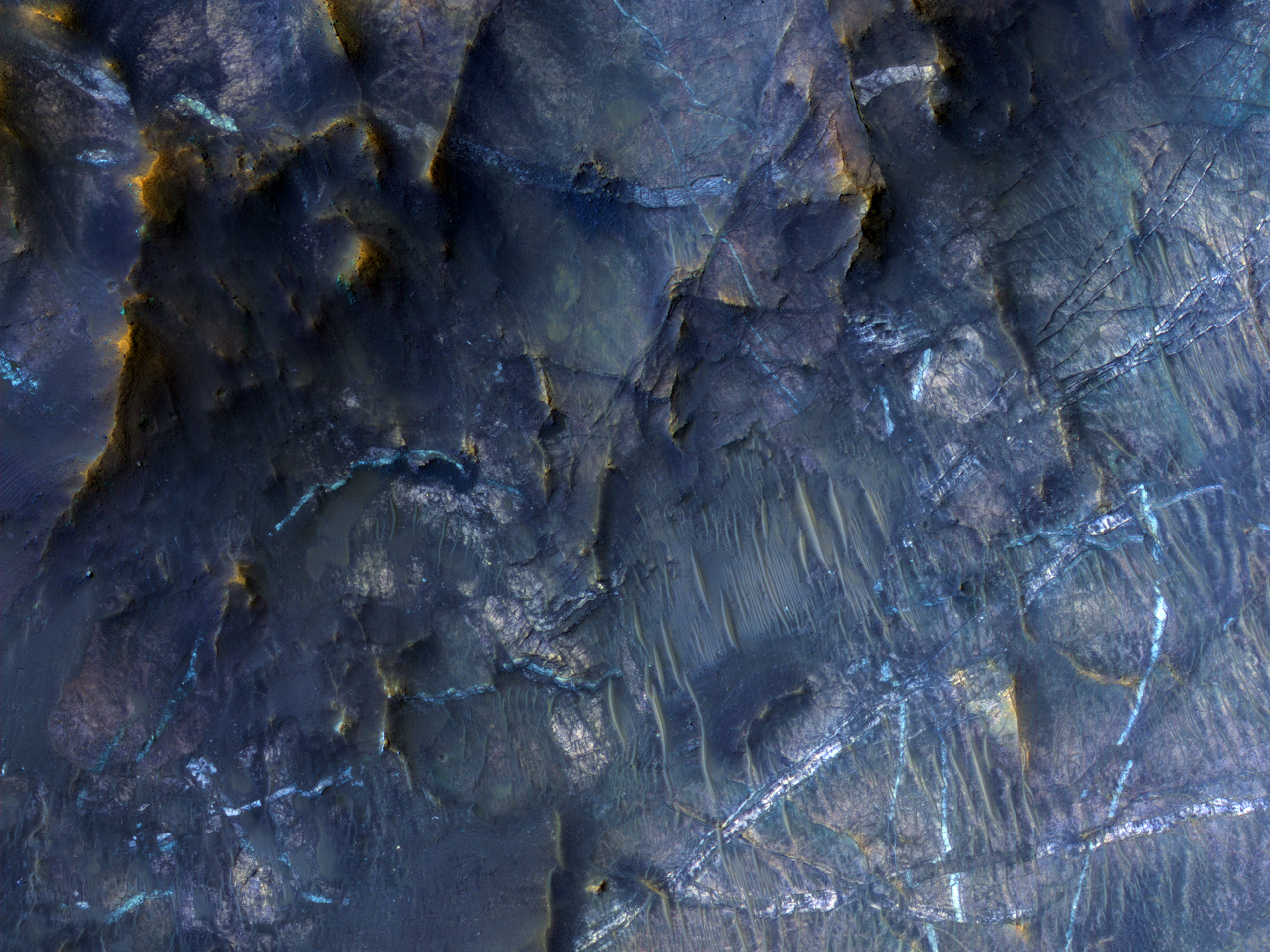
Today's Image of Mars shows huge, bright mineral veins on top of the central uplift of a crater measuring 50km in diameter. The central uplift measures 5km wide and is made up of bedrock dredged up from deep under the surface. Mineral veins are formed when water flows through fractures, depositing minerals.

Heat from the impact that created this crater melted ice and created a hydrothermal system that may have been capable of supporting life! Other areas on Mars have also shown signs of previously going through hydrothermal activity, which gives hope that it was once habitable since two of the requirements for life as we know it are water and heat!

Mars Exploration Rover Opportunity recently discovered a small mineral vein called Tisdale


Mars Photo of the Day - Feb 1 2012

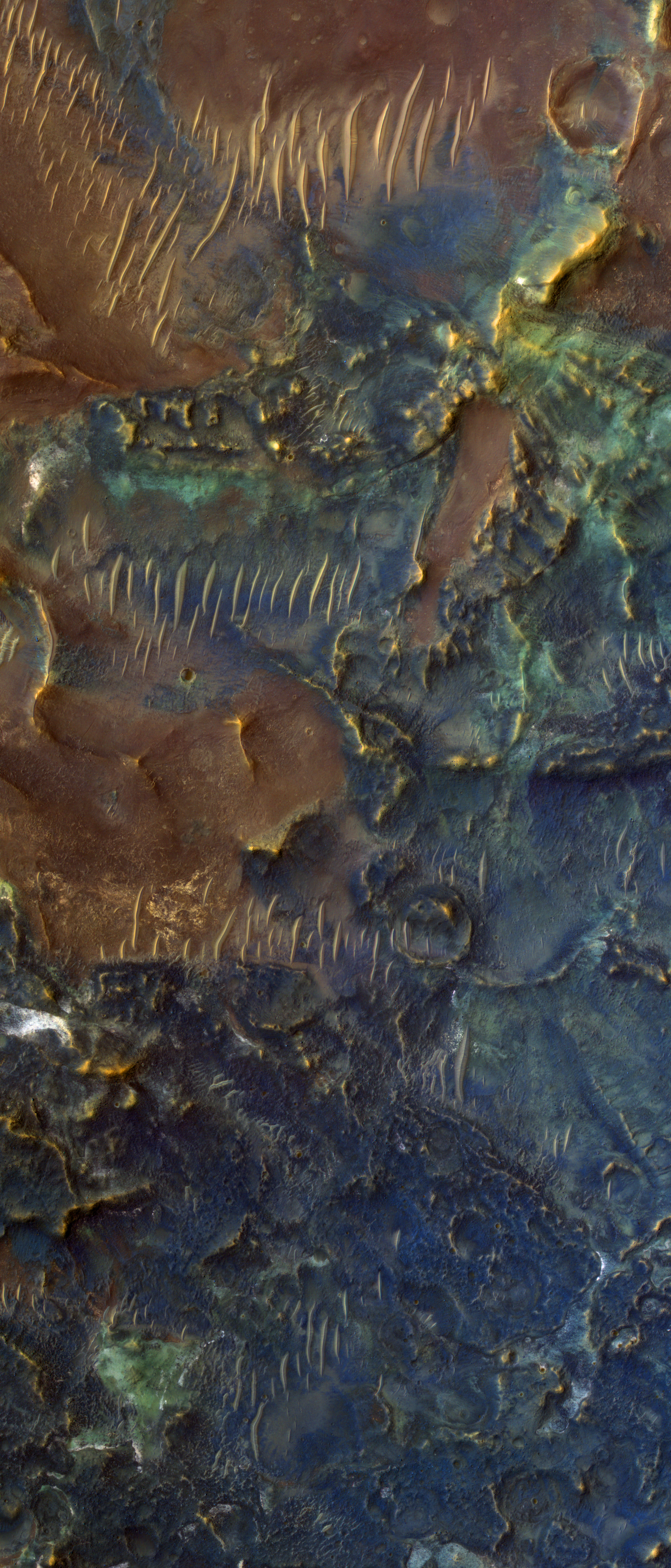
Today's Image of Mars shows the floor of Toro Crater, a 42km diameter crater in Syrtis Major, which exhibits phenomenal colors due to the different minerals within the crater.

The north-south oriented features are dunes crafted by the wind; they are much younger than the bedrock on which they lie. Scientists can determine the direction and strength of the wind in the crater by analyzing dune orientation and size.

Scientists speculate that Toro Crater experienced hydrothermal alteration, which is caused by the interaction of materials with water and heat. The blue and green colors are unaltered minerals like pyroxene and olivine, whereas the warmer colors are indicative of alteration in clays and other materials.

Toro Crater is of great interest to scientists because hydrothermal interactions are indicative of an environment hospitable to life. Because of this we may find that Toro Crater becomes the destination for a future mission to Mars!

Clicking on this image will take you to the original subimage from HiRISE. [See their captioned image]