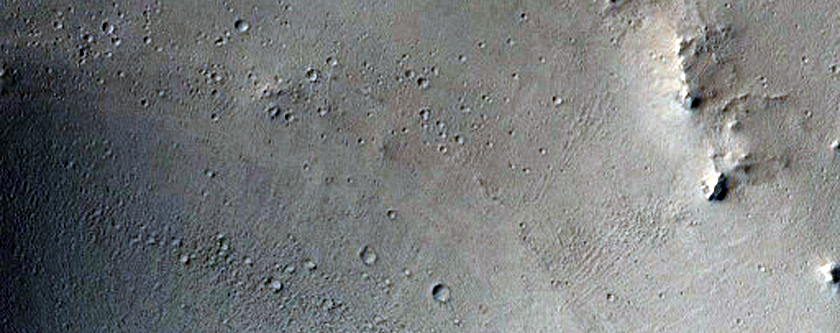
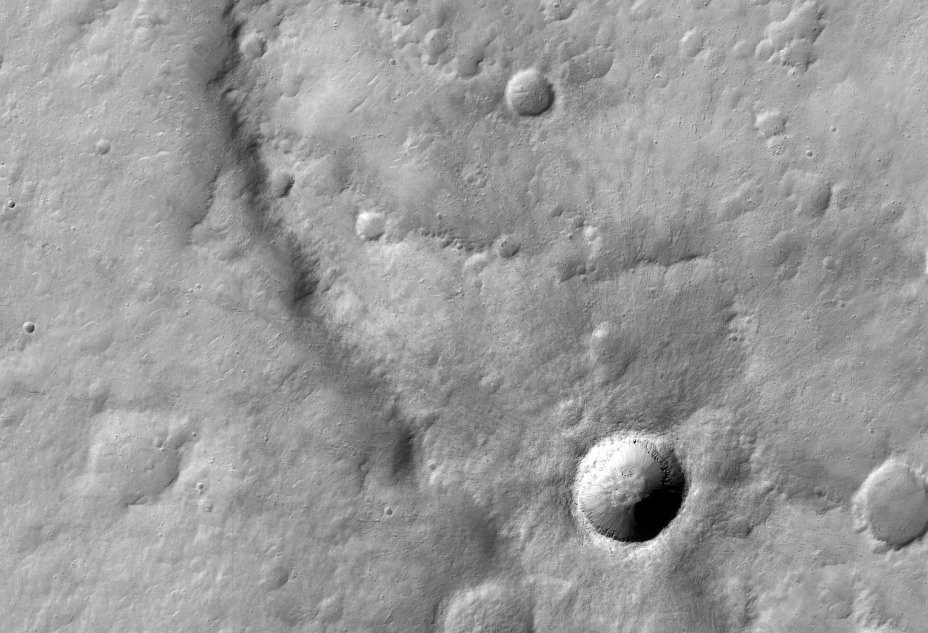
Today's Image of Mars comes from HIRISE and shows numerous secondary craters in Arabia Terra. Secondary craters are formed from the ejecta of an asteroid impact. When an asteroid hits the surface it launches chunks of rock into the air; sometimes the force of the impact sends them soaring for miles.
Scientists can usually determine the source of secondary craters by finding larger craters created around the same time. Examining secondary craters can help scientists determine how large the asteroid that initially made impact was and in some cases can provide insights as to the density and speed of the asteroid.
More often, secondary craters and ejecta blankets help to determine the age of the source crater because smaller craters will become covered and eroded faster than the larger one. The more visible the ejecta and secondary craters the more recent the initial impact.
Clicking on this image will take you to all the other HiRISE images of Mars showcased by Mars Travel because this one hasn't been captioned by the HiRISE team yet.