Google+ Mars Travel: Arabia Terra
Showing posts with label Arabia Terra. Show all posts

Mars Photo of the Day - Feb 21 2012

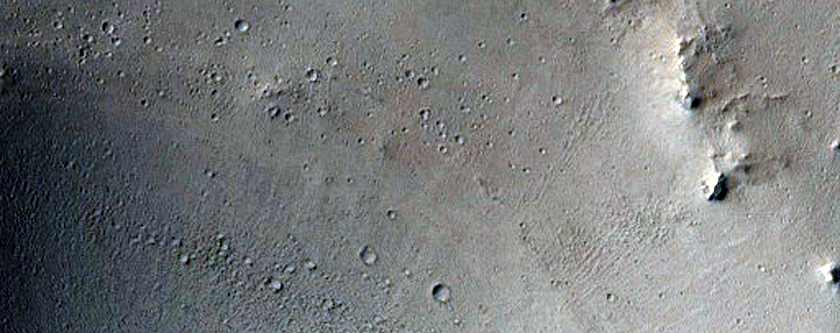
Today's Image of Mars comes from HIRISE and shows numerous secondary craters in Arabia Terra. Secondary craters are formed from the ejecta of an asteroid impact. When an asteroid hits the surface it launches chunks of rock into the air; sometimes the force of the impact sends them soaring for miles. 

Scientists can usually determine the source of secondary craters by finding larger craters created around the same time. Examining secondary craters can help scientists determine how large the asteroid that initially made impact was and in some cases can provide insights as to the density and speed of the asteroid. 

More often, secondary craters and ejecta blankets help to determine the age of the source crater because smaller craters will become covered and eroded faster than the larger one. The more visible the ejecta and secondary craters the more recent the initial impact.

Clicking on this image will take you to all the other HiRISE images of Mars showcased by Mars Travel because this one hasn't been captioned by the HiRISE team yet. 

Mars Photo of the Day - Jan 18 2012

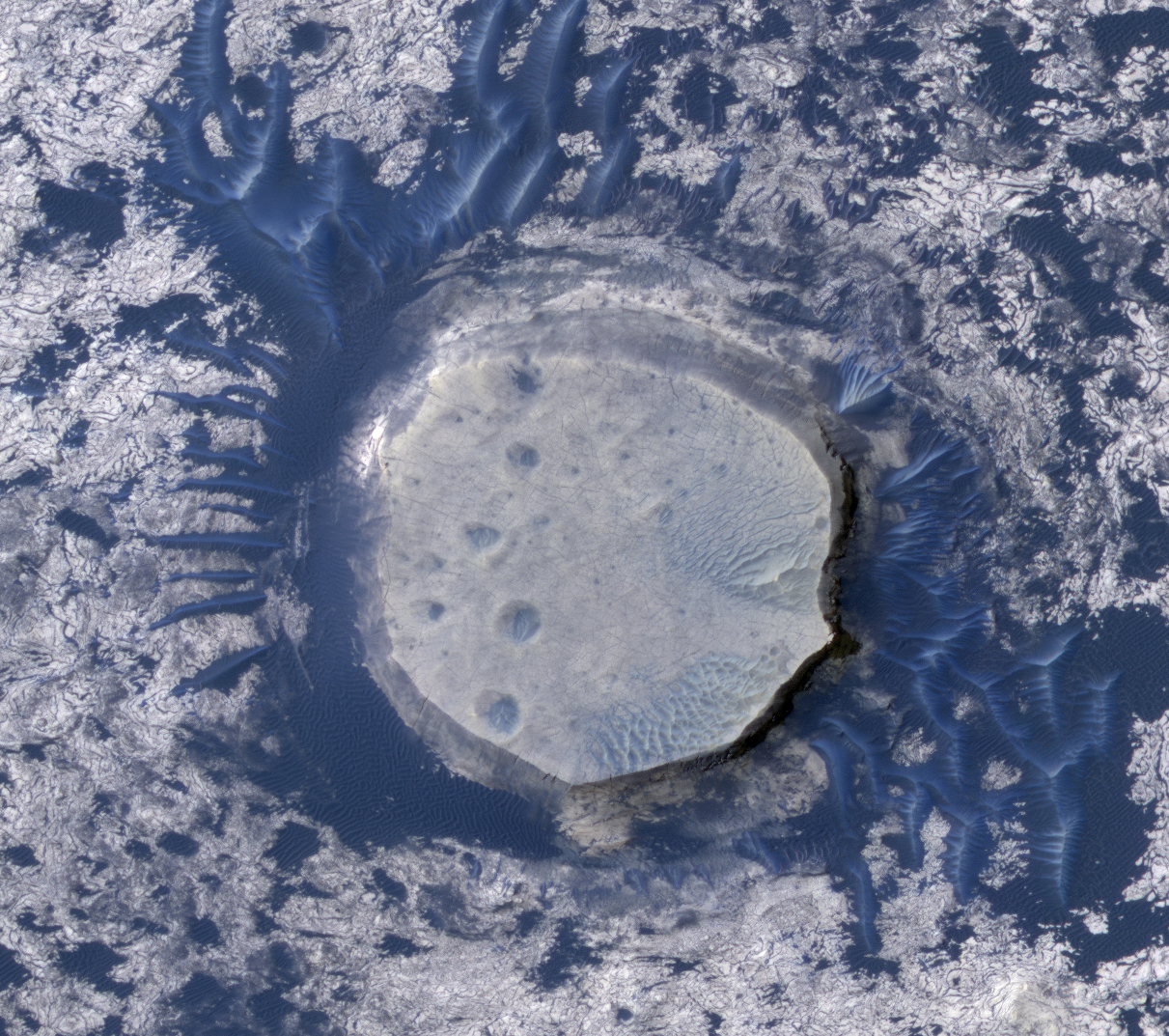
Today's Image of Mars is of an inverted crater surrounded by dark dunes in Arabia Terra. The dark dunes surrounding the inverted crater are comprised of basalt, a black igneous (volcanic) rock commonly found on Mars.

Inverted craters are formed in much the same way that inverted riverbeds are created. Sediment becomes deposited in the crater and packed down, usually in the presence of water. This make the material much denser and more wear-resistant than the surrounding terrain. Over the course of millions and billions of years wind erosion ended up wearing down the surrounding terrain, but since the sediment packed into this crater was more resistant, less of it was eroded. This created the inverted look that we see in the image below.

Clicking on this image will take you to a captioned HiRISE image that provides context for this inverted crater.