Google+ Mars Travel: ice flow
Showing posts with label ice flow. Show all posts

Mars Photo of the Day - 25 Jul 2012

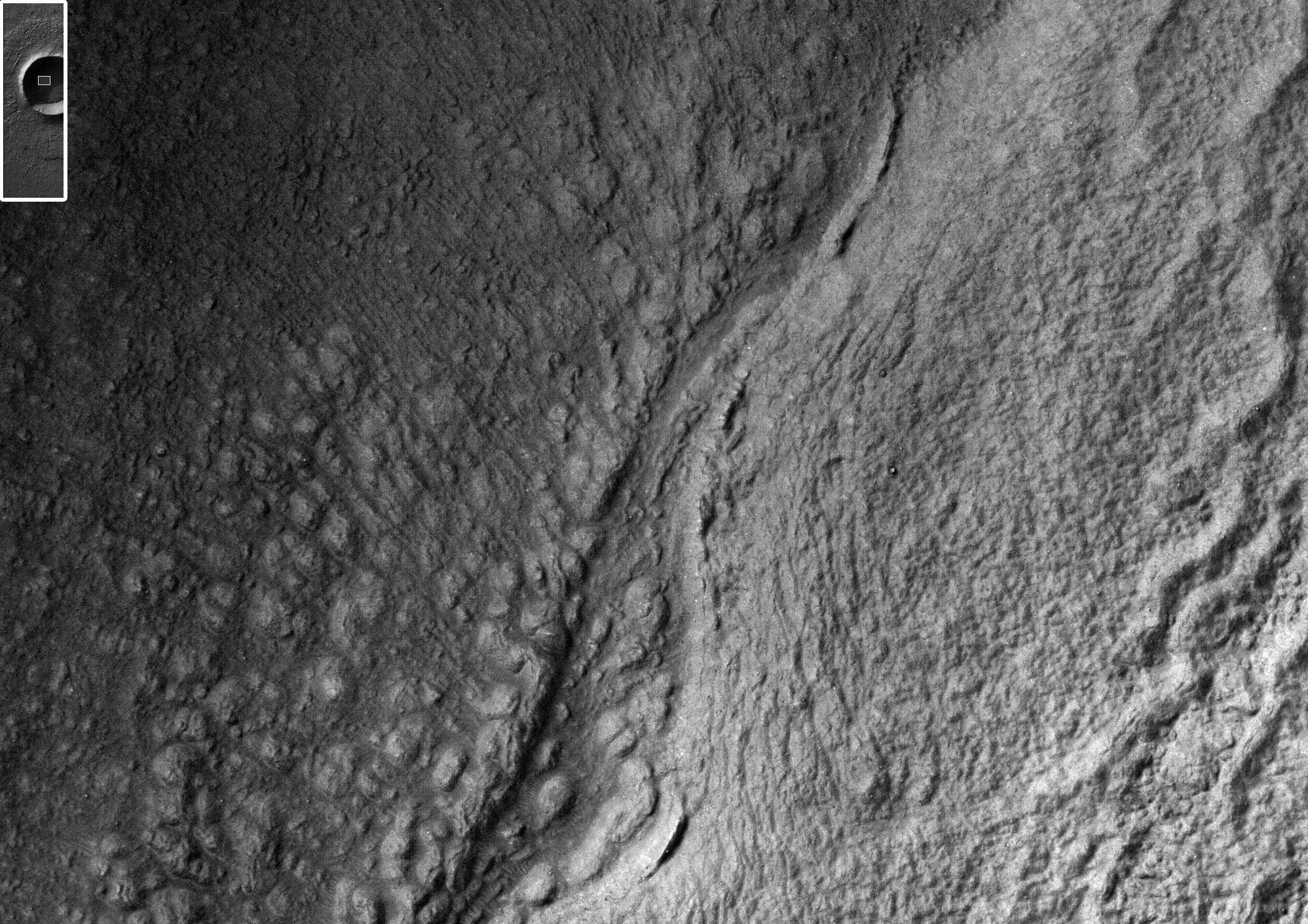
Today's image of Mars shows banded features indicative of past (and maybe present) glacial flow in Hellas Basin on Mars. The banded features we see in this HIRISE image are similar to those left on Earth where glaciers once flowed. 

Being able to understand these banded features on Mars will help scientists create a better image of what Mars looked like in the past. Being able to map out the Martian past will let scientists determine at which rate the icy glaciers moved. Understanding the Martian past will help us deal with the present and prepare for future exploration. 

Just as understanding Earth's past has helped us figure out why different continents have similar features, studying the geologic history of Mars will give us insight into the different features on Mars.

Clicking on this image will take you to the original high resolution image from HiRISE. [See the HiRISE caption]

Mars Photo of the Day - March 10 2012

Today's Image of Mars comes from HiRISE and shows icy flows inside in the inner slope of a Hellas Basin impact crater. HiRISE took this image when there was very little light illumination from the sun. This low illumination enhances some subtle features in the Martian terrain and makes for an extremely dramatic image.

Mars Reconnaissance Orbiter has confirmed that other flows like this one in the region are are made up of ice. Icy flows like the one below could one day be used as a source of fuel and/or water for future missions to Mars.

Clicking on this image will take you to the original high resolution image from HiRISE. [See their caption for the image]


Mars Photo of the Day - Feb 22 2012

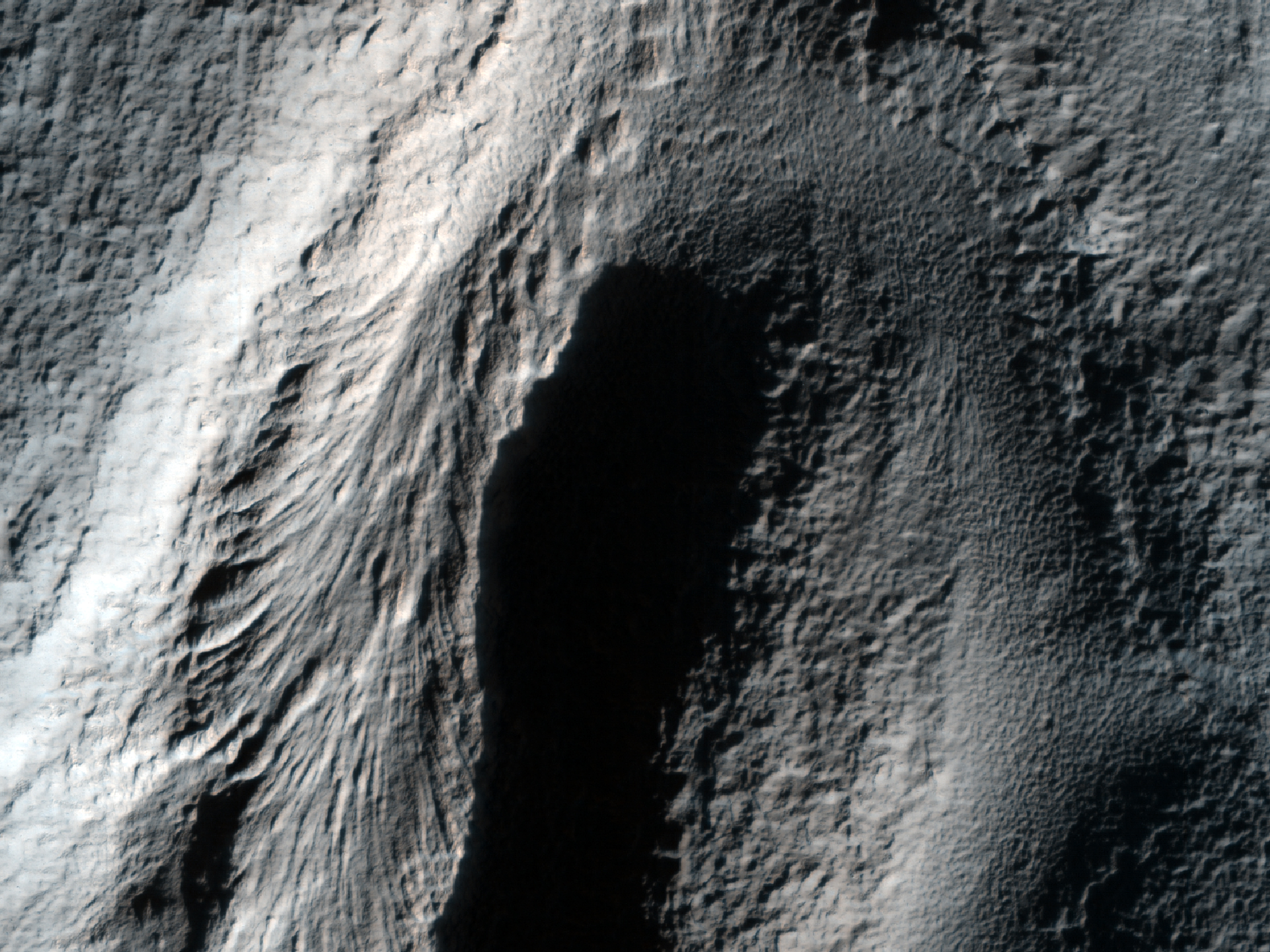
Today's Image of Mars was taken by HiRISE and shows part of an impact crater in Terra Cimmeria that is completely cast in shadow. Terra Cimmeria is located in the southern highland region of Mars. 

Much of the crater floor is cast in deep shadow because the sun was only 11 degrees over the horizon. The HiRISE cameras aboard the Mars Reconnaissance Orbiter are sensitive enough that they can see within most shadows. The image below shows an area completely shrouded in shadow, but HiRISE can still see features indicative of ice flow, a common finding in the southern highlands.

Clicking on this image will take you to the original image from HiRISE. [See their caption]