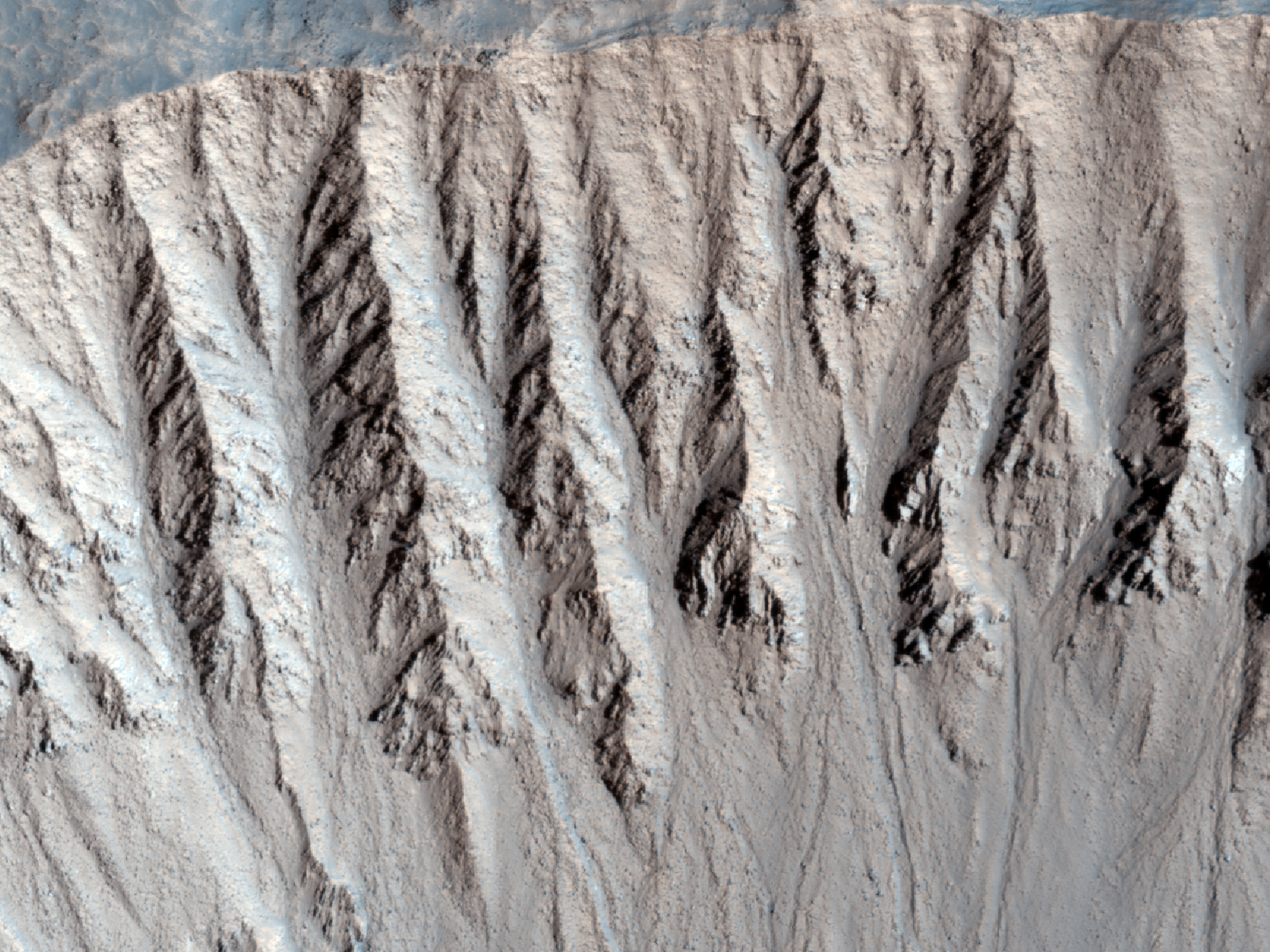
Today's Image of Mars shows the rim of an extremely recent impact crater in the Cydonia Colles Region, as taken by HiRISE. But how do we know that this is a recent impact crater?
An impact crater is deemed recent when it has a sharp rim, meaning that it is only lightly eroded. Generally crater rims undergo a process of erosion that wears away the sharpness of the rim. This occurs over hundreds of thousands, if not millions of years.
What does the term 'recent' mean?
The term recent is relative. In this case it is used in the geological sense, which means the crater could have formed tens of thousands of years ago or longer. The key is that it isn't as old and eroded as Gale Crater or other ancient impact sites.
On Mars it can take a long time for features to change. Because there is no precipitation on present-day Mars, the wind is the only eroding element. This means that it takes a long time to wear down sharp crater rims, sometimes millions of years depending on the area.
Clicking on this image will take you to the original high resolution image from HiRISE. [See the original caption]