Google+ Mars Travel: Recent Crater
Showing posts with label Recent Crater. Show all posts

Mars Photo of the Day - 20 Aug 2012

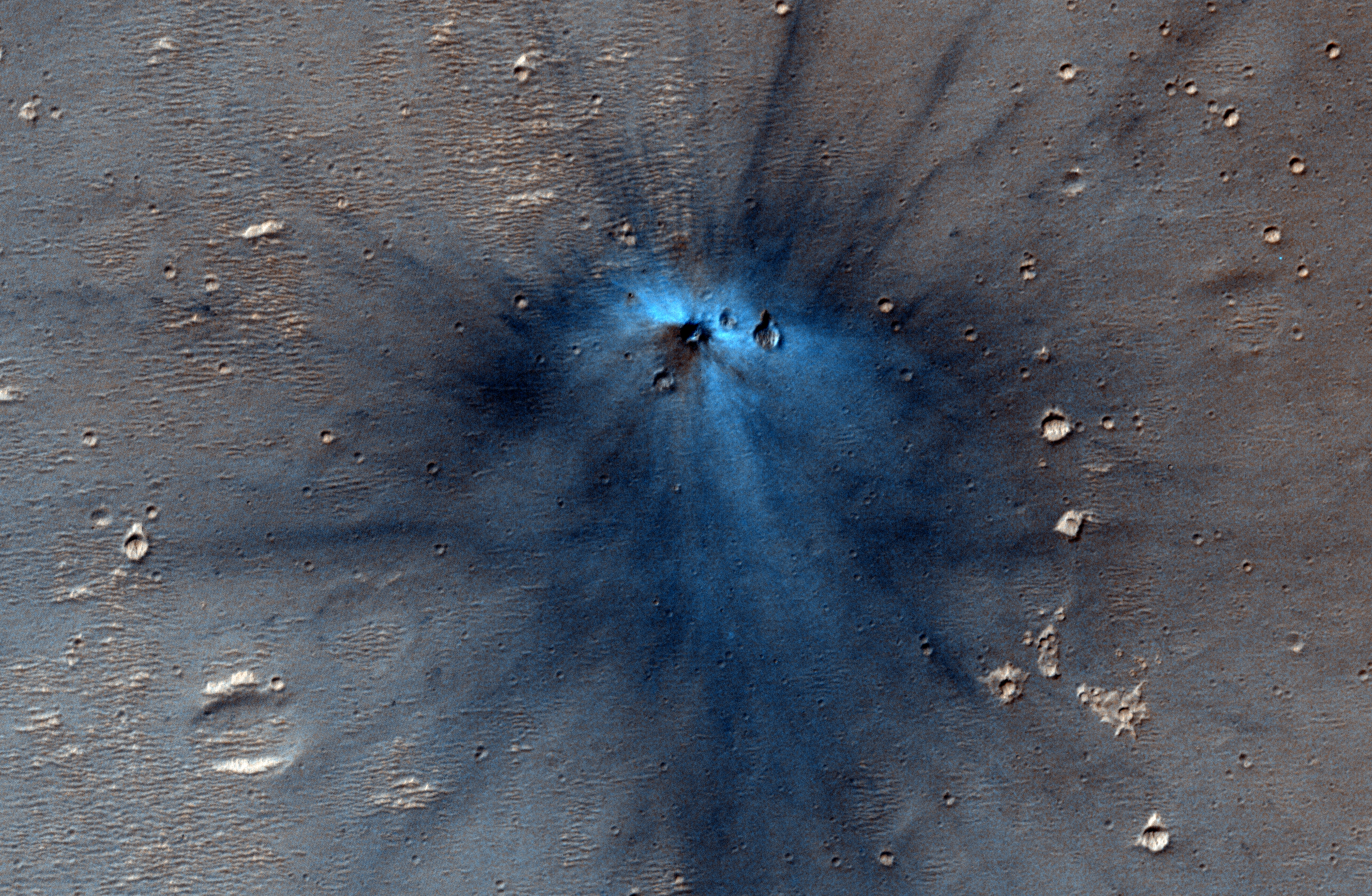
Today's Image of Mars shows a recent impact crater in Echus Chasma with a magnificient blast zone. This image comes from HiRISE and it has made the contrast between the material exposed by the blast very evident by excentuating the color difference. The true color would likely be a different shade of grey.

An image of this area was taken by THEMIS aboard Mars Odyssey Orbiter in 2009 and it didn't show this impact, but an image taken by Mars Reconnaissance Orbiter's Context Camera in 2011 showed what looked like an impact. This then prompted the HiRISE team to investigate, resulting in the image you see below. The discovery of this recent impact crater is a testament to how well multiple instruments on different orbiters can coordinate to make even more significant discoveries!

Clicking on this image will take you to the original high resolution image from HIRISE. [See their caption for the image]
Mars Photo of the Day - Feb 6 2012

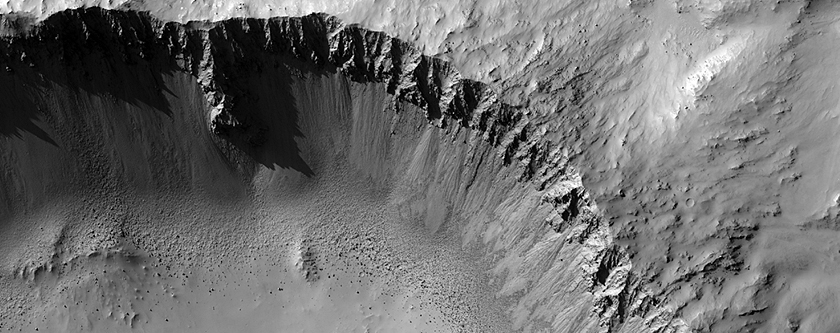
Todays Image of Mars shows a portion of a well preserved 6 to 7km crater imaged by HiRISE. A well preserved crater is one that has a sharp crater rim, deep essentially unfilled cavity, and small impact features preserved. A well preserved crater will also have few, if any superimposing features like subsequent impact craters or lava flows. 

Scientists are interested in well preserved craters because they're oftentimes relatively recent and reveal active processes, like gully formation, boulder faults, and slope streaks. Being able to see these ongoing processes helps scientists to better understand the environment on Mars and allows them to better predict what will happen when an asteroid impacts. 

These predictions may be extremely helpful in the future if one of our rovers is sent to explore a recent impact crater. Knowing what to expect could ensure that future missions go smoothly and aren't disrupted  by an unforeseen change to the structure of a crater, etc. 

Not only can studying active craters teach scientists about active processes on Mars, but they can sometimes reveal ice or water that was just below the surface. Discoveries like this can completely revolutionize our understanding of the past Martian climate and help scientists plan future manned missions to Mars, where water will be critical.

Clicking on this image will take you to the original, captioned image from HiRISE.


Mars Photo of the Day - Jan 26 2012

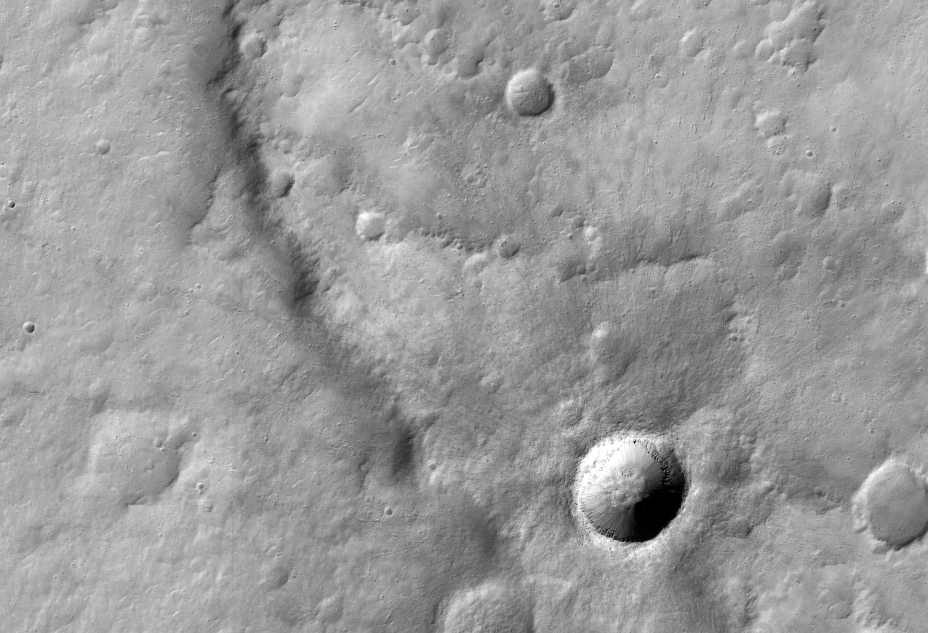
Today's Image of Mars comes from HiRISE and shows an extremely fresh impact crater superimposed over a wrinkle ridge in Hesperia Planum. Wrinkle ridges are low, winding ridges formed when lava first cools and contracts. The often extend for several hundred kilometers.

The real prize of this photo is the impact crater on the bottom right. Scientists believe this crater is extremely fresh because the rim is distinct and sharp and the crater's shape has not been modified. Look closely (click on the image) and you will see the faint signs of ejecta surrounding the crater, some of which created secondary craters.

Clicking on this image will take you to the original image from HiRISE. [See the image with HiRISE caption]


Mars Photo of the Day - Jan 21 2012

Today's Image of Mars shows some spectacularly colored gullies in a relatively fresh crater on Mars near Argyre Basin. The crater is in such pristine condition that scientists believe it was formed within the last million years or so.

You can see in this image that the gullies and their deposits have many different colors. This is because the relatively recent impact exposed many different rock types and the gullies are still active, so they have yet to be covered by windblown deposits.

Clicking on this image will take you to the original high resolution image from HiRISE. I highly recommend checking it out because it's pretty amazing. [See the HiRISE caption for the image].