Google+ Mars Travel: Echus Chasma
Showing posts with label Echus Chasma. Show all posts

Kasei Valles and Echus Chasma

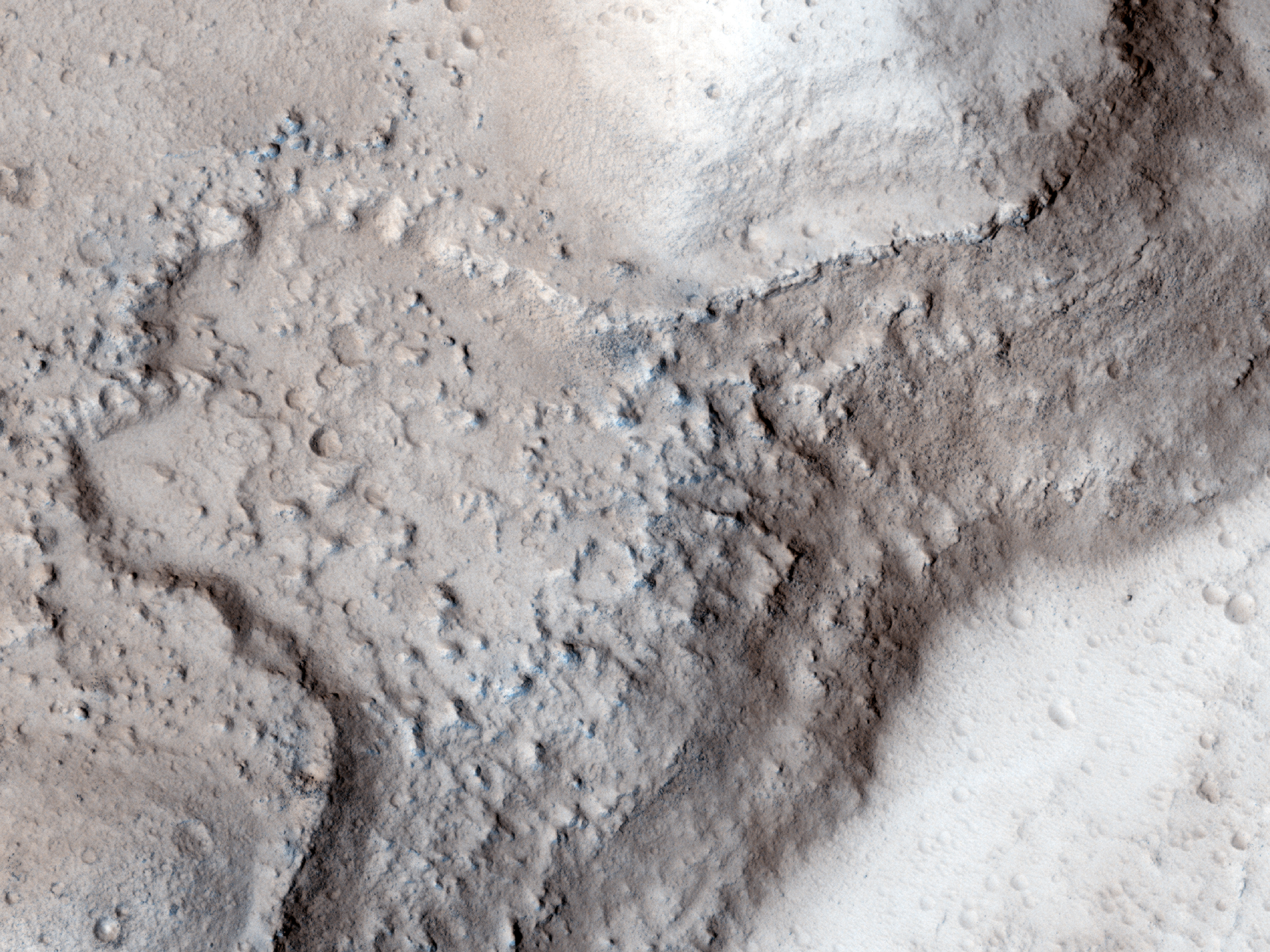
Most people know by now that Mars once contained a massive amount of water on its surface. It was during this period that Kasei Valles (shown below) was created by flood waters on Mars.

Kasei Valles
Image Credit: European Space Agency's Mars Express

One of the largest outflow channels on Mars, Kasei Valles measures 3000 km in length with a depth of 3 km, spanning a total of 1.55 million square kilometers.
Kasei Valles
Source: HiRISE
Within Kasei Valles lies the remains of Sharanov Crater, which had its southern rim collapsed by the floods that created the valley. This 100 km wide crater is depicted at top center in the below perspective view of Kasei Valles.

Sharanov Crater in Kasei Valles perspective view
Image Credit: European Space Agency's Mars Express

The floods that created Kasei Valles are thought to have emanated from Echus Chasma, which is imaged below. Echus Chasma spans 100km long and 10km wide and cuts into Lunae Planum, which is north of Valles Marineris.

Echus Chasma
Image Credit: European Space Agency's Mars Express
Echus Chasma was likely created when an impact or tectonic shift released water from a pressurized acquifer. Much like a dam breaking with enormous pressure, the force of the water ruptured the ground, leaving the incision we call Echus Chasma.

Echus Chasma
Image Credit: European Space Agency's Mars Express
The resulting release of water flooded the area directly north of Echus Chasma, thus creating Kasei Valles.
Mars Photo of the Day - 20 Aug 2012

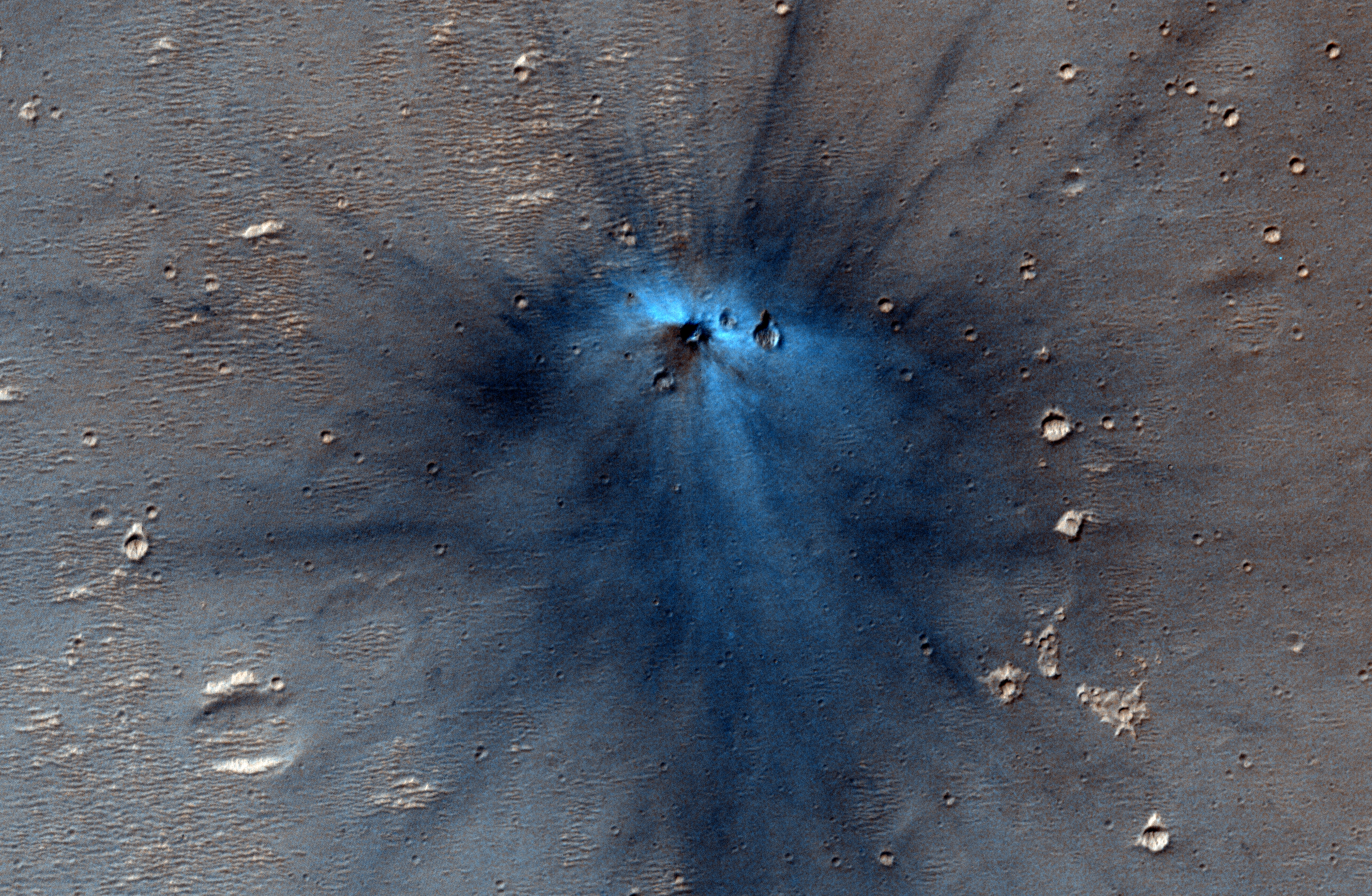
Today's Image of Mars shows a recent impact crater in Echus Chasma with a magnificient blast zone. This image comes from HiRISE and it has made the contrast between the material exposed by the blast very evident by excentuating the color difference. The true color would likely be a different shade of grey.

An image of this area was taken by THEMIS aboard Mars Odyssey Orbiter in 2009 and it didn't show this impact, but an image taken by Mars Reconnaissance Orbiter's Context Camera in 2011 showed what looked like an impact. This then prompted the HiRISE team to investigate, resulting in the image you see below. The discovery of this recent impact crater is a testament to how well multiple instruments on different orbiters can coordinate to make even more significant discoveries!

Clicking on this image will take you to the original high resolution image from HIRISE. [See their caption for the image]

Mars Photo of the Day - Mar 11 2012

Today's Image of Mars is a perspective view of Echus Chasma as taken by the High Resolution Stereo Camera (HRSC) aboard Mars Express. Located in Lunae Planum and measuring 100km long and 10km wide, Echus Chasma is one of the largest sources of water on Mars. 

The 4000m deep trough is thought to be the source for water that carved Kasei Valles, a 1780 km (1100 mi) long set of flood carved channels on Mars. 

Clicking on this image will take you to the original high resolution image from Mars Express. [See their article on Echus Chasma]


Mars Photo of the Day - Feb 18 2012

Today's Image of Mars shows Echus Chasma, which was once one of the largest sources of water on Mars, spanning 100km long and 10km wide and cutting into Lunae Planum north of Valles Marineris. Echus Chasma was the source of water that carved Kasei Valles, a 1780 km (1100 mi) long set of flood carved channels on Mars.

Clicking on this image will take you to the original high resolution from the ESA's Mars Express High Resolution Stereo Camera (HRSC). [See their extensive information on the image and others like it]


Mars Photo of the Day - Nov 9 2011

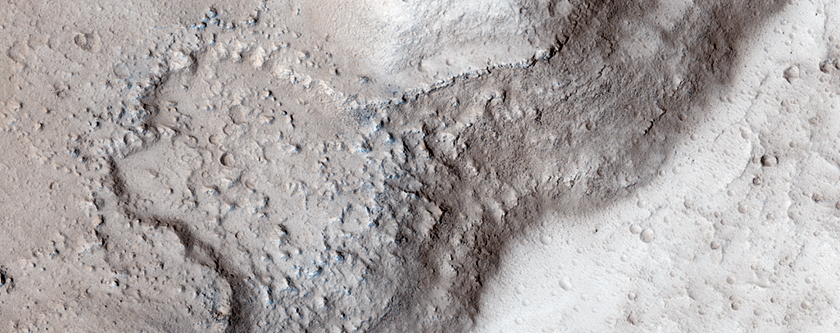
Today's Image of Mars is from Kasei Valles, a 1780 km (1100 mi) long set of flood carved channels on Mars. This image focuses on a much narrower channel that was carved into Kasei Valles.

Many channels carved by water on Mars are covered by a more recent layer of lava. In many cases the fissures that released the water, later release the lava that covers the channels, but in the case of Kasei Valles, the lava came from a different location than the water. 

Kasei Valles was carved by floods from Echus Chasma, but the lava came from a source between the Tharsis Volcanoes and only covers the lowlands of the valleys. 

This image links to the original captioned image by HiRISE.