Google+ Mars Travel: Isidus Planitia
Showing posts with label Isidus Planitia. Show all posts

Mars Photo of the Day - Apr 23 2012

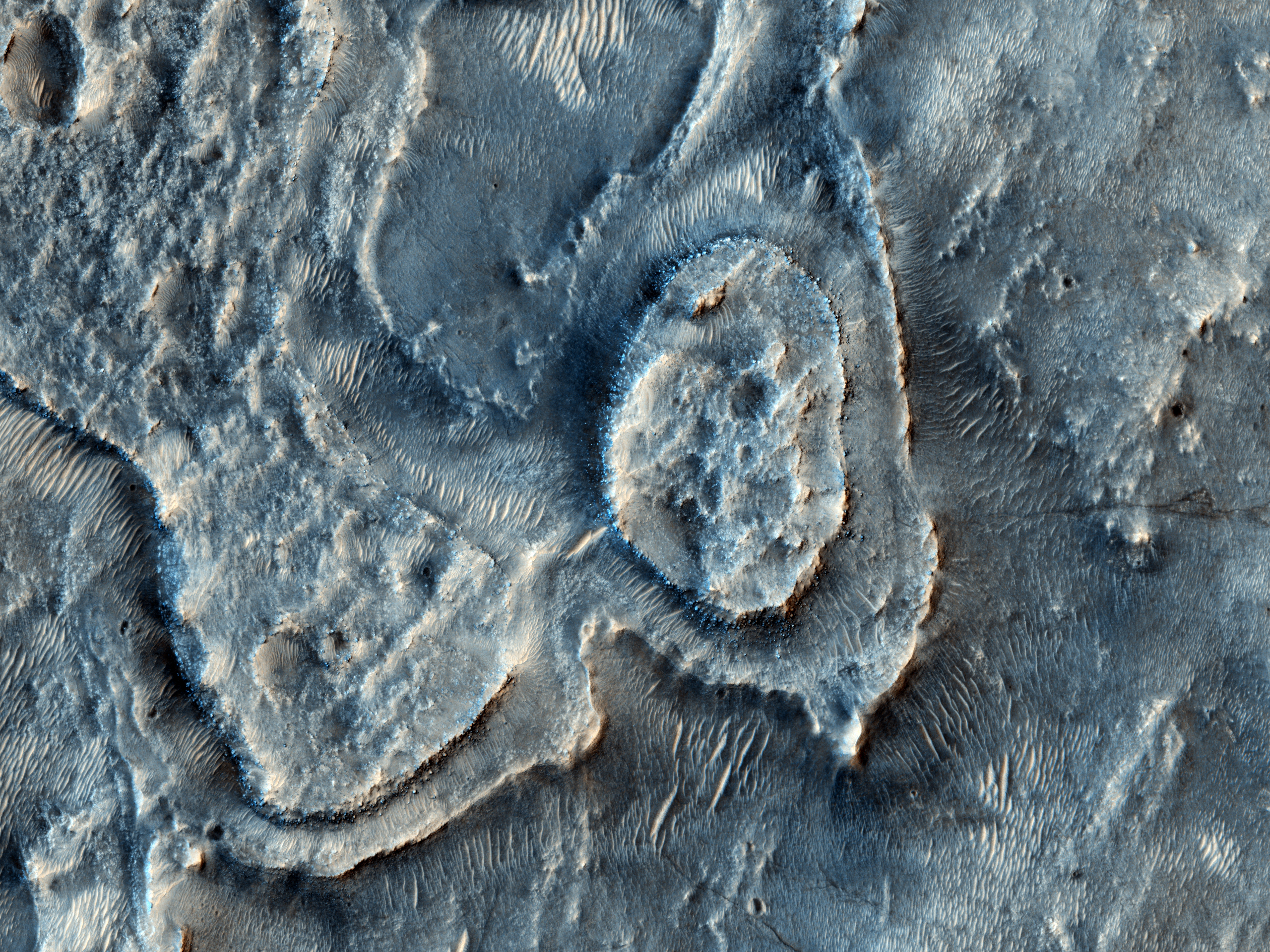
Today's Image of Mars shows a potential landing site for future missions to Mars in Northeast Syrtis Major, near the northwestern rim of Isidis Planitia, a giant impact basin. The region exposes bedrock from the Early Noachian period, which was approximately 4 billion years ago.

Some of the exposed bedrock contains hydrated minerals that were deposited during times when the Martian environment may have been more conducive to life as we know it. There is a wealth of knowledge to be gained from studying ancient bedrock up close with a rover, so we will likely find that Syrtis Major will be on the list potential landing sites for future manned or unmanned missions to Mars!

Clicking on this image will take you to the original high resolution image from HiRISE. [See the original captioned image from HiRISE]
Mars Photo of the Day - Apr 19 2012

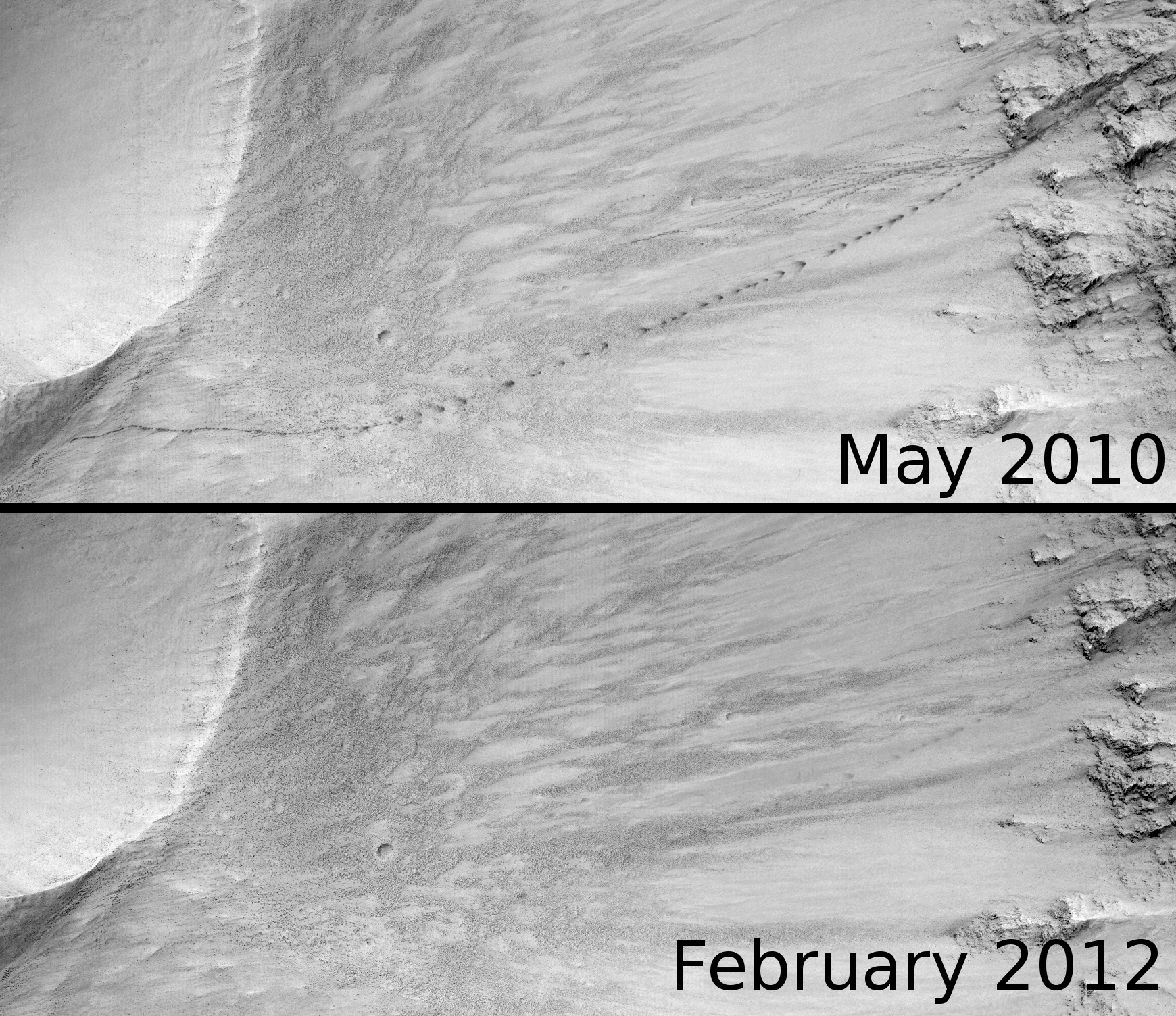
Today's Image of Mars is a reminder that features on Mars are constantly changing due to wind erosion. The image from May 2010 shows tracks left from large and small boulders as they rolled and bounced down the slope in Eastern Isidus Planitia. When you compare that with the image of the same area in February 2012 you'll notice that all but the largest trail has been completely erased from the surface, and even that has been significantly faded.

It's important that we realize that not all features on Mars are permanent. This is in direct contrast to the Moon, where even today the footprints of the Apollo astronauts can be seen. Understanding that Mars is still a changing planet is essential when sending future missions to Mars because we need to make sure that we use more permanent features for navigation while on the Red Planet. This may seem obvious, but when you look down from orbit it's easy to forget that some features can change in just a matter of months, given the right circumstances. 

Click on this image to see the original in high resolution from HiRISE. [See the original HiRISE caption for this image]