Google+ Mars Travel: European Space Agency
Showing posts with label European Space Agency. Show all posts

Mars Photo of the Day - Feb 2 2012

Today's Image of Mars was taken on Jan 14 2004 and was one of the first returned from the European Space Agency's Mars Express orbiter. The image shows a stretch of Valles Marineris, considered to be the Grand Canyon of Mars. 

The raised surfaces seen in this image are likely inverted riverbeds formed when the sediment deposited by rivers is harder than the surrounding terrain. Over billions of years erosion wore down the surrounding terrain, but because the riverbeds were more resistant to erosion they were reduced much less, thus creating the inverted features you see in the image below.

Clicking on this image will take you to the original high resolution image from Mars Express. [See the ESA article on this image]


Contact Made with Phobos-Grunt - Mission May Proceed

ESA Tracking station in Perth, Australia
Image Credit: ESA
On Tuesday (Nov 22 2011) at 20:25 UT a tracking station based in Perth, Australia made contact with Phobos-Grunt. This was the first signal received on Earth from the spacecraft since it launched on November 8 2011. [Phobos-Grunt, Yinghuo-1, and LIFE Remain in Earth's Orbit]

Teams from the European Space Agency (ESA) that made the original contact are in discussions with Russian engineers to determine the best method for maintaining contact with Phobos-Grunt. According to Ria Novosti five attempts will be made to get telemetry from the spacecraft on Thursday. Each attempt will last for approximately 6-7 minutes.

If contact is made could the mission continue as planned?

While Ria Novosti and others report that the window to continue the mission passed on November 21 2011, some people like Dr. David Warmflash, lead investigator for the LIFE experiment on board the Phobos-Grunt spacecraft, says the mission could go on if Phobos-Grunt leaves Earth's orbit anytime well into December.

Why is this?

Current missions to Mars must fall within a specified launch window when travel between Earth and Mars is most optimal. Launch windows are calculated by determining a spacecrafts propulsion capabilities and the alignment of the concerned celestial bodies. Launch windows to get from Earth to Mars (or Mars to Earth) are around once every 26 months.

Phobos-Grunt could still make it to Mars within this launch window, but the issue is that by the time it collected samples from Phobos it would have missed the launch window for the trip back to Earth. That means that samples could not be returned until 2016, 26 months later than planned.

The two ride-along missions would still be fulfilled. 


Yinghuo-1 would be China's first foray to Mars. It would separate from the larger Russian probe in October 2012 (or maybe later now) and begin a year-long orbit of Mars. Its primary purpose is to collect data about the Martian atmosphere. On board it has a plasma package, a fluxgate magnetometer, a radio occultation sounder, and an optical imaging system. It also has two solar arrays to collect energy.

The Living Interplanetary Flight Experiment (LIFE), created by the Planetary Society is an astrobiological experiment containing ten types of organisms. It is an international venture, with cooperation from the Russian Space Research Institute, the Institute of Biomedical Problems of the Russian Academy of Sciences, the Moscow State University, the American Type Culture Collection, and the Institute of Aerospace Medicine, Germany. The mission is to see what types of organisms can survive the harsh conditions of space travel. Please see the LIFE page for more information on their missions.


The two ride along missions would essentially be unaffected by an extended stay on Mars. Yinghuo-1 is only set to remain in orbit for a year regardless and the purpose of the LIFE is to determine whether life can survive the harsh conditions of deep space for an extended period of time, so prolonging the time would likely only help to the experiment.

It remains to be seen whether commands can be sent to Phobos-Grunt, but for now there is renewed hope that the mission can go on.

For the latest information on the Phobos-Grunt mission I highly recommend following Dr. David Warmflash, (@CosmicEvolution) on Twitter.


Russia Looks Set to Become Partner in ExoMars Mission

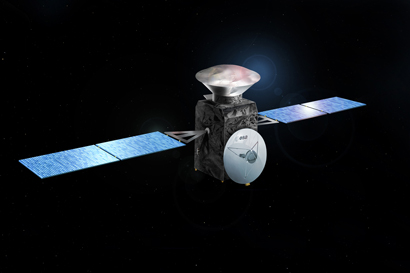
On October 13 2011 the European Space Agency (ESA) announced that it has officially invited Russia to become a full partner in the joint Euro-US ExoMars mission. The mission, which planned to launch an orbiter in 2016 and the rover in 2018, has suffered numerous setbacks primarily due to funding issues. 


ExoMars Trace Gas Orbiter Conceptualization
Credit: ESA
The decision to invite Russia comes after budget issues forced NASA to downgrade its participation and cut their contribution of a second Atlas V rocket needed for the whole mission to launch. With only one rocket the mission would have to be cut in half and the ExoMars Trace Gas Orbiter would be forsaken in favor of the rover. The planned orbiter intended to use equipment provided almost entirely by NASA to detect trace gases in the Martian atmosphere, but has since been forced to look for alternative providers. 


And what other country has the funds, hardware, and interest to support a mission to Mars? 


Russia does, so the ESA has turned to Russia, hoping that they will contribute a Proton rocket, equipment, and additional funding to the mission, in return for making them a full partner in the ExoMars project. This would enable them to conduct their own scientific experiments with the rover and orbiter while giving them a say in all aspects of the mission. ESA Director-General Jean-Jacques Dordain emphasized that “This could end up being an even grander mission than it would have with a full Russian participation, It’s not simply a matter of asking the Russians, ‘Please provide us a launcher.’” The added participation of Russia would ensure adequate funding and even allow for the mission to be expanded.


Early reports suggest that Russia will accept the ESA's proposal. Oleg Korablyov, deputy chief of the Space Research Institute of the Russian Academy of Sciences was quoted by Ria Novosti as saying that "from the scientific point of view such [a] mission would be of great interest to us, it would boost our own Mars research," while claiming that "it would be a bargain and a tangible step towards Mars Net," a Russian plan to to create a network of meteorological stations on Mars. 

Russia has a long history of failure when it comes to Mars. Two Russian landers have made it to the surface, only to cease communication upon touch down. The Mars 2 and Mars 3 Orbiter's sent in late 1971 were the only real successes and they were terminated in August of 1972. The last Russian attempt at a mission to Mars was Mars 96 in 1996, but it suffered a launch failure.

Russia does have a mission to the Martian moon Phobos scheduled to launch in November of 2011. This ambitious mission, dubbed Phobos-Grunt, will be an orbiter, lander, and sample return mission of the Martian moon. However the 2018 ExoMars lander mission would be their first attempt at reaching The Red Planet's surface since 1996.

We won't know for sure until Russia makes an official announcement, but all indications point to them becoming full partners in the ExoMars mission. As more information emerges it will be posted here!

Mars Photo of the Day - Sept 25 2011

Today's Mars Photo is of Galle Crater, which is a 230 km crater resembling the classic smiley face. This image was taken by the European Space Agency's (ESA) Mars Express High Resolution Stereo Camera (HRSC). This happy face crater was first discovered by the Viking I Orbiter mission.

This image will link to the original one on ESA servers, which is much  higher-resolution.

Instigating a New Space Race

Is a new space race beginning?

With the head of the European Space Agency (ESA), Jean-Jacques Dordain, pledging to work together with the Russian Federal Space Agency (RKA) to send the first manned mission to Mars, one must wonder if the next space race has been initiated. [Europe and Russia Pledge to Send Man to Mars]

NASA recently cancelled their planned Constellation program, which would have attempted to put a permanent base on the moon in the 2020s in order to eventually use it as a launching platform for deep space missions. Instead they have made it their goal to put man on an asteroid by 2025 and a man on Mars by 2035.

Will actually beginning preparation for a joint European-Russian mission to Mars push up the priority of a similar mission in the United States? Will there be a competition between nations to get to Mars first?

ESA chief Dordain seems to have chosen the opportune time to announce this joint mission, as NASA's shuttle program just reached completion. The speculation is abound that this announcement will spark a new space race, with NASA on one end and the ESA and RKA on the other.
 VS


The benefits of sending the first men to Mars are immeasurable, as the organization to do so would be given great prestige throughout the scientific community. They would also be able to perform tests that rovers are unable to. The first organizations to accomplish sending men to Mars would also have a head start on all future Martian development.

The next few months may see the start of a new space race, as the ESA and RKA's joint plans mature more and a timeline is created. If they develop a reasonable plan of action it may drive NASA to push their program up in order to get to Mars first. For now this is all just hope and speculation, but we have nothing without hope.

I think the biggest question is the how big a role corporations like SpaceX will play in the upcoming space race and future Mars travel and development.


Europe and Russia Pledge to Send Man to Mars

On Aug 17 2011 the head of the European Space Agency (ESA), Jean-Jacques Dordain, announced that they would partner with the Russian Federal Space Agency (RKA) to "carry out the first flight to Mars together." The head of the RKA, Vladimir Popovkin welcomed the pledge. 
This commitment comes as the Euro-Russian Mars500 experiment comes to completion in November. Dordain does not set a time frame, but says that the Mars500 experiment has been a factor in the decision for the ESA and RKA's pledge to send a manned mission to Mars. 
The Mars500 program was initiated on June 03 2010 by the Moscow Institute of Medical and Biological Problems in order to simulate a mission to Mars. The experiment simulates a 250 day journey to Mars, a 30 day stay on The Red Planet, and a 240 day return flight.  Mars500 simulates emergency situations that a manned mission to Mars might encounter and attempts to accurately determine how well humans can cope with a trip to and from Mars.
The spacecraft's crew is led by 38 year old engineer Alexei Sitev, and also includes Russian surgeon Sukhrob Kamolov, 32, and Russian general practitioner Alexander Smolevsky, 33. Non-Russian crew members include Italian Diego Urbina, 27, China's Wang Yue, 27, and the Roman Charles from France, 31.
The Crew of Mars500 in their mock spacecraft Source: ESA
Dordain's commitment to Mars travel is something to be expected, as the United States' NASA has set a goal of setting a man on Mars by the mid 2030s. The competition that this new announcement might bring could help increase the priority of a manned mission to Mars and push up the date. It would bring great prestige to the nation that could land the first man on Mars, much like the moon landing helped to solidify NASA's leadership in space.
A time frame for a joint Euro-Russian mission to Mars has yet to be set by the ESA or RKA, but as Mars500 culminates there will likely be an announcement on the matter. Igor Lisov, an analyst for the Moscow-based journal Novosti Kosmonavtike (Cosmonautic News) gave his own estimation of the time frame to the Voice of Russia saying "If they decide to implement an emergency program, the mission may be carried out in 10 years. If it is an ordinary one, then it will take 20 years. This is a long period of time." While this is not an official statement from either agency, it provides hope for those hoping to see a man on Mars in their lifetime. 
Cooperation between the two space agencies when it comes to Mars is not unprecedented. Both agencies, as well as NASA, have worked together since 2006 to develop EkzoMars (ExoMars), a Mars rover that will be launched from a Russian Proton Rocket in 2013 and supplied with both Russian and European equipment. 
ExoMars Rover
 It is firmly believed in Russian and Europe that future success with Mars travel and exploration will be made by working together. There are sure to be some exciting developments and/or announcements in the coming months as the Mars500 simulation comes to an end!