Google+ Mars Travel: ExoMars
Showing posts with label ExoMars. Show all posts

Mars Photo of the Day - Apr 10 2012

Today's Image of Mars shows a potential 2018 landing site for the joint ESA-Roscosmos ExoMars Rover. This candidate site is in Cerberus Palus, but it is one of many potential landing sites for the ExoMars rover.

The original HiRISE image has no caption yet, so this will direct to other potential landing sites for the ExoMars rover.

NASA was recently forced to back out of its obligation to provide material support for the mission worth more than $2 Billion. Russia's Roscosmos recently agreed to take over the portion of mission abandoned by NASA, quelling fears that most or all of the ExoMars missions would have to be scrapped.

While Roscosmos has agreed to increase their participation in the joint Mars mission, they have yet to formalize the agreement and cement out the specifics. The ESA and Roscosmos plan to finalize the agreement at some point in November. The important things for now is that the mission is still on schedule to launch the Trace Gas Orbiter in 2016 and the rover in 2018!

People Throw Rocks at Things That Shine - Like NASA's Mars Program

People throw rocks at things that shine - Taylor Swift

One of the most successful and inspiring NASA programs has been the Mars program. The United States is the only country to have successfully navigated a rover on the Martian surface, and most of our missions have long outlasted their expiration date. It could even be said that NASA's Mars program has been the shining jewel of the space agency, making numerous discoveries and expanding our knowledge of The Red Planet beyond any expectations. Unfortunately it seems that Taylor Swift's lyric "People throw rocks at things that shine" is true even for NASA and the space industry.

In order to maintain flagship programs like the Space Launch System (SLS) and James Webb Space Telescope (JWST), The White House's NASA Budget request for 2013 has disproportionately cut 20% of the planetary science funding. The 2013 budget allocates only $1.2 billion a year, down from $1.5 billion, with more cuts expected to come. This severely limits NASA's ability to send missions that would further study different bodies in our solar system, including Mars.
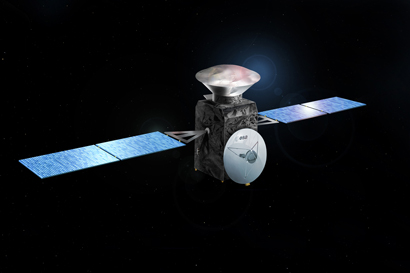
ExoMars Trace Gas Orbiter Concept
Credit: ESA

Because of these cuts to the planetary science funding, NASA has been forced to back out of the joint ExoMars mission to Mars with the European Space Agency. The mission was set to launch the ExoMars Trace Gas Orbiter in 2016 and a rover in 2018, but now the entire mission is in jeopardy. 

Fortunately, Russia may be willing to take a more central role in the mission, thus giving hope that it will be able to continue and collect valuable information about the Martian atmosphere and surface.


It's depressing to hear that one of NASA's forefront programs is losing a disproportionate amount of funds, but there is still hope for the future of Mars travel and exploration! [The following comes from a previous article called SpaceX is Winning the Race to Mars.]

---

The emergence of private space corporations with ambitions beyond low-Earth orbit gives hope to humanity because they can focus solely on space exploration and development and are not limited by bureaucratic procedures like government agencies are.

The future of space exploration is in the hands of ambitious companies like SpaceX whose sole focus is space development and exploration. Hopefully SpaceX can achieve their stated goal of setting a man on Mars in the next 10-20 years, thus starting a new era of private, competitively priced space travel and exploration. The developments in space made by private companies, not governments, will usher in a new era of human exploration and expansion throughout the known universe.
---

Hopefully SpaceX will still continue working with NASA on the proposed Red Dragon Mission to Mars. Either way the future is sure to be full of more discoveries on Mars by the machines we already have in place and the Mars Science Laboratory (MSL), which is set to land in Gale Crater in August 2012! 


Who knows, maybe MSL will discover something that reinvigorates the nation's love of space and increases funding for NASA's planetary science division!

Russia Looks Set to Become Partner in ExoMars Mission

On October 13 2011 the European Space Agency (ESA) announced that it has officially invited Russia to become a full partner in the joint Euro-US ExoMars mission. The mission, which planned to launch an orbiter in 2016 and the rover in 2018, has suffered numerous setbacks primarily due to funding issues. 


ExoMars Trace Gas Orbiter Conceptualization
Credit: ESA
The decision to invite Russia comes after budget issues forced NASA to downgrade its participation and cut their contribution of a second Atlas V rocket needed for the whole mission to launch. With only one rocket the mission would have to be cut in half and the ExoMars Trace Gas Orbiter would be forsaken in favor of the rover. The planned orbiter intended to use equipment provided almost entirely by NASA to detect trace gases in the Martian atmosphere, but has since been forced to look for alternative providers. 


And what other country has the funds, hardware, and interest to support a mission to Mars? 


Russia does, so the ESA has turned to Russia, hoping that they will contribute a Proton rocket, equipment, and additional funding to the mission, in return for making them a full partner in the ExoMars project. This would enable them to conduct their own scientific experiments with the rover and orbiter while giving them a say in all aspects of the mission. ESA Director-General Jean-Jacques Dordain emphasized that “This could end up being an even grander mission than it would have with a full Russian participation, It’s not simply a matter of asking the Russians, ‘Please provide us a launcher.’” The added participation of Russia would ensure adequate funding and even allow for the mission to be expanded.


Early reports suggest that Russia will accept the ESA's proposal. Oleg Korablyov, deputy chief of the Space Research Institute of the Russian Academy of Sciences was quoted by Ria Novosti as saying that "from the scientific point of view such [a] mission would be of great interest to us, it would boost our own Mars research," while claiming that "it would be a bargain and a tangible step towards Mars Net," a Russian plan to to create a network of meteorological stations on Mars. 

Russia has a long history of failure when it comes to Mars. Two Russian landers have made it to the surface, only to cease communication upon touch down. The Mars 2 and Mars 3 Orbiter's sent in late 1971 were the only real successes and they were terminated in August of 1972. The last Russian attempt at a mission to Mars was Mars 96 in 1996, but it suffered a launch failure.

Russia does have a mission to the Martian moon Phobos scheduled to launch in November of 2011. This ambitious mission, dubbed Phobos-Grunt, will be an orbiter, lander, and sample return mission of the Martian moon. However the 2018 ExoMars lander mission would be their first attempt at reaching The Red Planet's surface since 1996.

We won't know for sure until Russia makes an official announcement, but all indications point to them becoming full partners in the ExoMars mission. As more information emerges it will be posted here!

Europe and Russia Pledge to Send Man to Mars

On Aug 17 2011 the head of the European Space Agency (ESA), Jean-Jacques Dordain, announced that they would partner with the Russian Federal Space Agency (RKA) to "carry out the first flight to Mars together." The head of the RKA, Vladimir Popovkin welcomed the pledge. 
This commitment comes as the Euro-Russian Mars500 experiment comes to completion in November. Dordain does not set a time frame, but says that the Mars500 experiment has been a factor in the decision for the ESA and RKA's pledge to send a manned mission to Mars. 
The Mars500 program was initiated on June 03 2010 by the Moscow Institute of Medical and Biological Problems in order to simulate a mission to Mars. The experiment simulates a 250 day journey to Mars, a 30 day stay on The Red Planet, and a 240 day return flight.  Mars500 simulates emergency situations that a manned mission to Mars might encounter and attempts to accurately determine how well humans can cope with a trip to and from Mars.
The spacecraft's crew is led by 38 year old engineer Alexei Sitev, and also includes Russian surgeon Sukhrob Kamolov, 32, and Russian general practitioner Alexander Smolevsky, 33. Non-Russian crew members include Italian Diego Urbina, 27, China's Wang Yue, 27, and the Roman Charles from France, 31.
The Crew of Mars500 in their mock spacecraft Source: ESA
Dordain's commitment to Mars travel is something to be expected, as the United States' NASA has set a goal of setting a man on Mars by the mid 2030s. The competition that this new announcement might bring could help increase the priority of a manned mission to Mars and push up the date. It would bring great prestige to the nation that could land the first man on Mars, much like the moon landing helped to solidify NASA's leadership in space.
A time frame for a joint Euro-Russian mission to Mars has yet to be set by the ESA or RKA, but as Mars500 culminates there will likely be an announcement on the matter. Igor Lisov, an analyst for the Moscow-based journal Novosti Kosmonavtike (Cosmonautic News) gave his own estimation of the time frame to the Voice of Russia saying "If they decide to implement an emergency program, the mission may be carried out in 10 years. If it is an ordinary one, then it will take 20 years. This is a long period of time." While this is not an official statement from either agency, it provides hope for those hoping to see a man on Mars in their lifetime. 
Cooperation between the two space agencies when it comes to Mars is not unprecedented. Both agencies, as well as NASA, have worked together since 2006 to develop EkzoMars (ExoMars), a Mars rover that will be launched from a Russian Proton Rocket in 2013 and supplied with both Russian and European equipment. 
ExoMars Rover
 It is firmly believed in Russian and Europe that future success with Mars travel and exploration will be made by working together. There are sure to be some exciting developments and/or announcements in the coming months as the Mars500 simulation comes to an end!