
Google+ Mars Travel: olivine
Showing posts with label olivine. Show all posts

Colorful Crater on Mars

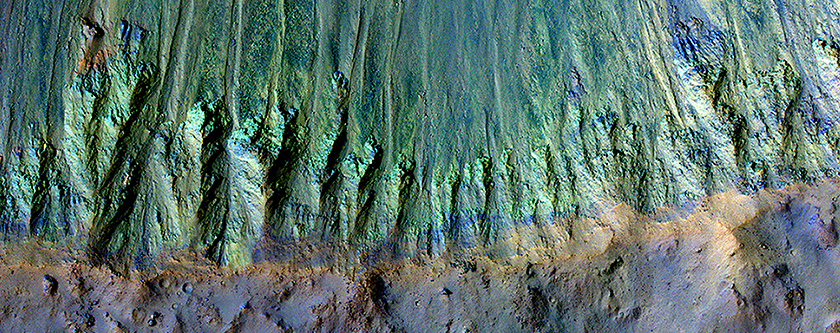
Check out these colorful images of a young, well preserved crater on Mars! When this 5km (3.1 mi) diameter crater was created it exposed a whole litany of minerals that may otherwise have been hidden under millions of years of dust build up and layered deposits.

The green (pictured bottom left) along the crater's south rim is representative of minerals like olivine and pyroxene, typically found in lava and underground magma flows. The yellow seen at the top of the image could be indicative of material changed by water, however, scientists also say it could just be a coating of dust. If the yellow material is just dust that could be indicative of a north blowing wind, which pushed the dust up against the south-facing north wall of the crater.

Click on the photo on the right to see the high resolution version from HiRISE. Click the bottom left photo to see the HiRISE caption

Mars Photo of the Day - Apr 8 2012

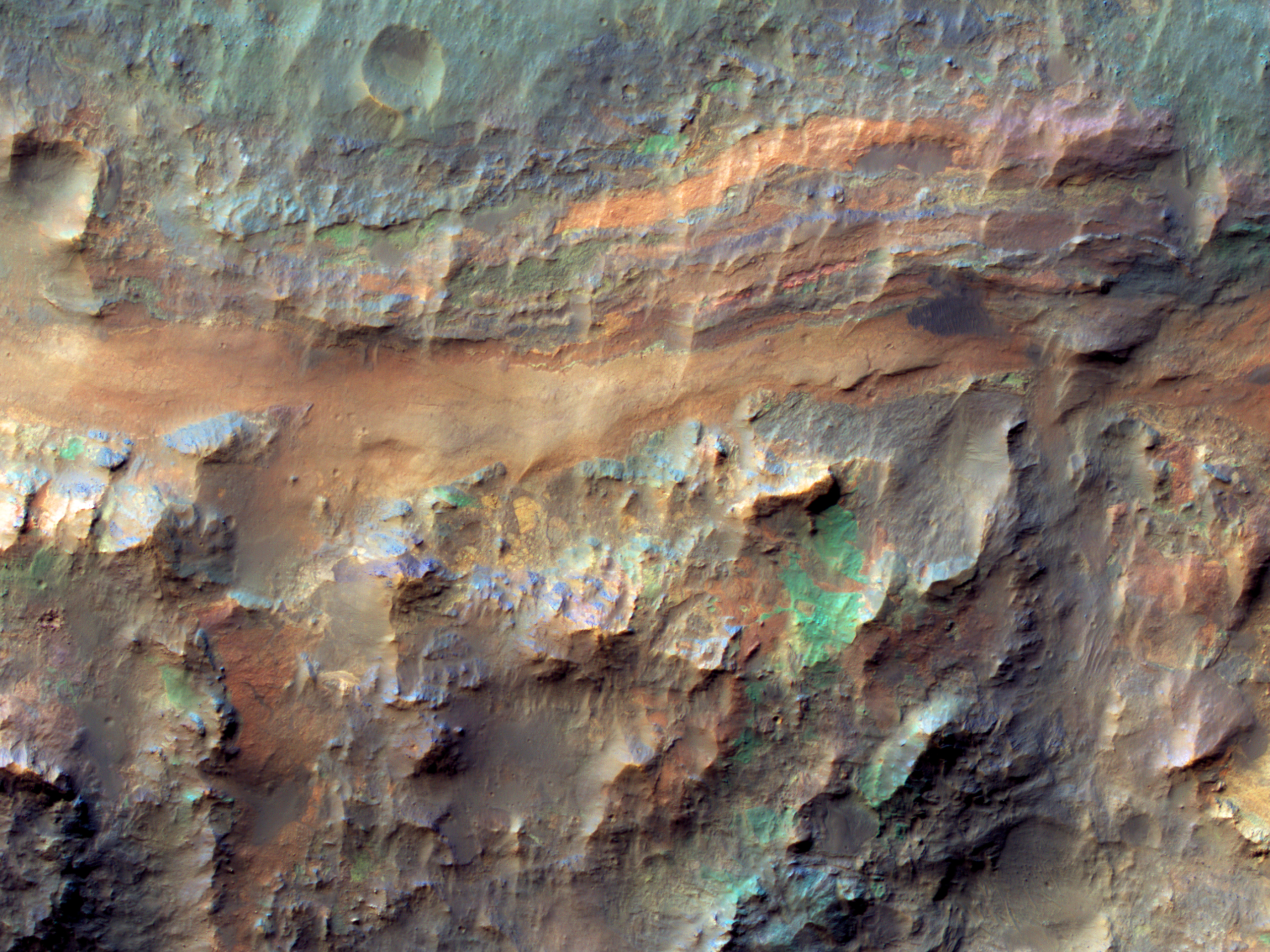
Today's Image of Mars comes from HIRISE and shows distinct sedimentary layers on the floor of Ritchey Crater. These layered deposits help to provide insight about the past climate on Mars and the periods of change The Red Planet went through.

The blues and greens in the image are indicative of dry periods where the minerals were not altered by the presence of water. Examples of minerals that would fall into this category are olivine and pyroxene. The warmer colors, like the oranges and yellows, are minerals like sulfates and clays that were formed in the presence of water. 

Clicking on this image will take you to the original high resolution image from HiRISE. [See their caption for this image]


Mars Photo of the Day - Nov 29 2011

Today's Image of Mars shows part of El Dorado, located in Gusev Crater, the landing site for Mars Exploration Rover Spirit back in 2004. 

El Dorado is a field of dark, rippled sand that is visible from space as a dark spot on the side of Columbia Hills. The composition of El Dorado results in the low albedo feature seen from orbit. It was determined that El Dorado is a large deposit of dark windblown, "well rounded, well sorted, olivine rich" sand (Lunar Planetary Institure). While the sands of El Dorado are different than those in other parts of Gusev Crater, they are not as different as the image taken from orbit suggested. 

The disparity between the image taken from orbit and the ground image is a result of people interpreting the raw images sent from the orbiter incorrectly. For a full report on this phenomena, please see The Planetary Society's article about Spirit from 2006 where this image is also discussed.

Clicking on this image will take you to the High Resolution Image from NASA.