Google+ Mars Travel: central uplift
Showing posts with label central uplift. Show all posts

Mars Photo of the Day - Mar 22 2012

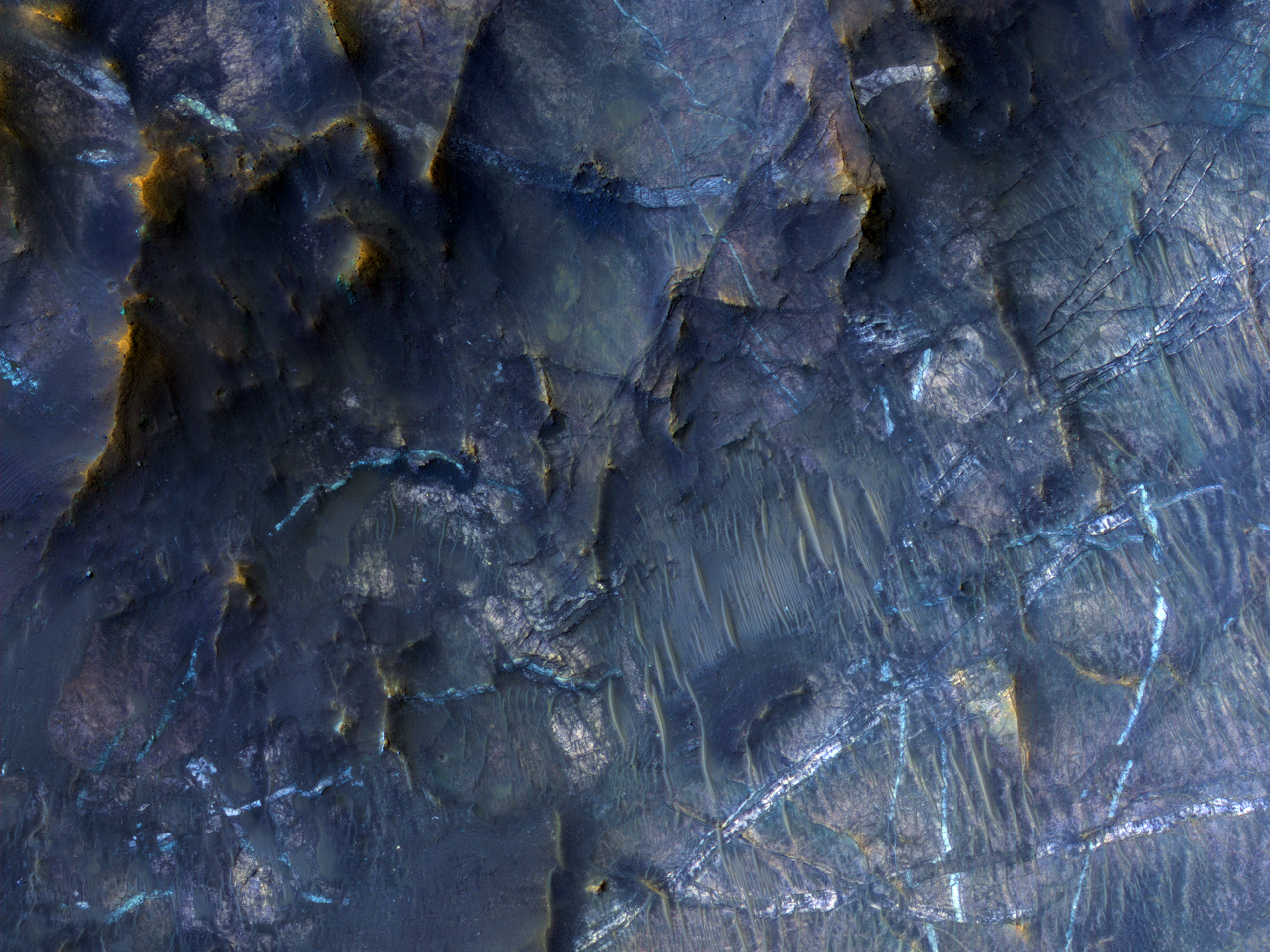
Today's Image of Mars shows huge, bright mineral veins on top of the central uplift of a crater measuring 50km in diameter. The central uplift measures 5km wide and is made up of bedrock dredged up from deep under the surface. Mineral veins are formed when water flows through fractures, depositing minerals.

Heat from the impact that created this crater melted ice and created a hydrothermal system that may have been capable of supporting life! Other areas on Mars have also shown signs of previously going through hydrothermal activity, which gives hope that it was once habitable since two of the requirements for life as we know it are water and heat!

Mars Exploration Rover Opportunity recently discovered a small mineral vein called Tisdale


Mars Photo of the Day - Feb 16 2012

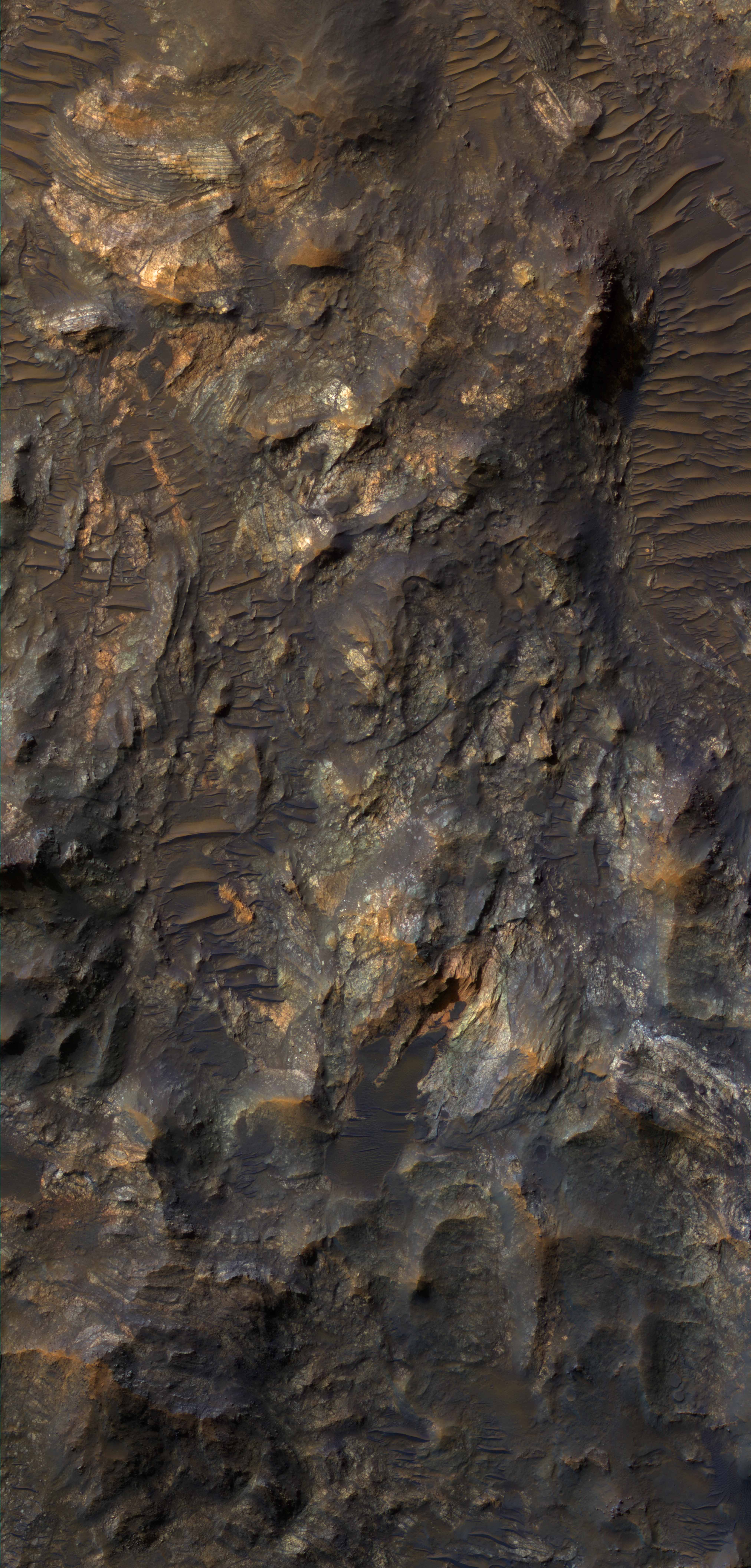
Today's Image of Mars comes from HiRISE and shows an uplifted jumble of ancient terrain in a crater located in the volcanic plains between Argyre Basin and Valles Marineris. Large craters often have central mounds that result from structural uplift and reveal material buried deep under the surface over the course of millions and sometimes billions of years.

Examining these central mounds allows scientists to determine the past environment on Mars by examining the composition of the layered deposits making up the mound. This is exactly what Mars Science Laboratory, Curiosity will be doing when it lands in Gale Crater this August.

Clicking on this image will take you to the original high resolution image from HiRISE. [See their caption for the image]


Mars Photo of the Day - Dec 18 2011

Today's Image of Mars shows some interesting features in and near the the central uplift of Ritchey Crater. At the top of this image you can see an ancient streambed. Just above the center of the image are multi-colored rocks and minerals in the crater's central uplift. 

Central uplifts are created when a newly formed crater's walls succumb to gravity and collapse in toward the center. This process often results in material being dredged up from deep within the crater walls.

Ritchey Crater is approximately 79km in diameter. Scientists are extremely interested in Ritchey Crater because it contains so many well preserved layers. The dark, more wear-resistant layer at the top of the central uplift acts as a cap to the underlying layers, protecting them from erosion. The layers underneath are softer and lighter. It is speculated that the layers may be composed of volcanic ash, sedimentary deposits, or sand dunes.

This image is the same size as the original, uncaptioned HiRISE image, so instead it will link to the Wikipedia page for Ritchey Crater, which unfortunately doesn't have much more information than I've provided above.


If you like the HiRISE images showcased in the Mars Photo of the Day posts I encourage you to enter for a free 2012 HiRISE Calendar