Google+ Mars Travel: Deuteronilus Mensae
Showing posts with label Deuteronilus Mensae. Show all posts

Mars Photo of the Day - 25 June 2012

Today's Image of Mars shows what happened in Deuteronilus Mensae when ice quickly disappeared from the surface. The image below is of glaciers that once contained an abundance of ice, but when the climate changed, much of the ice on and near the surface disappeared into the atmosphere.

When the ice sublimated into the atmosphere it caused overlying terrain to collapse in on itself, creating the sharp, irregular features you see below. If we can determine when the features changed then that could tell us exactly when the climate on Mars went through a transition. If we know when the transition occurred we can make better guesses as to the reason behind the climate change. Perhaps an enormous asteroid collided with the planet, or maybe the rotational axis changed; there are unlimited possibilities, but knowing the time frame can help us narrow them down.
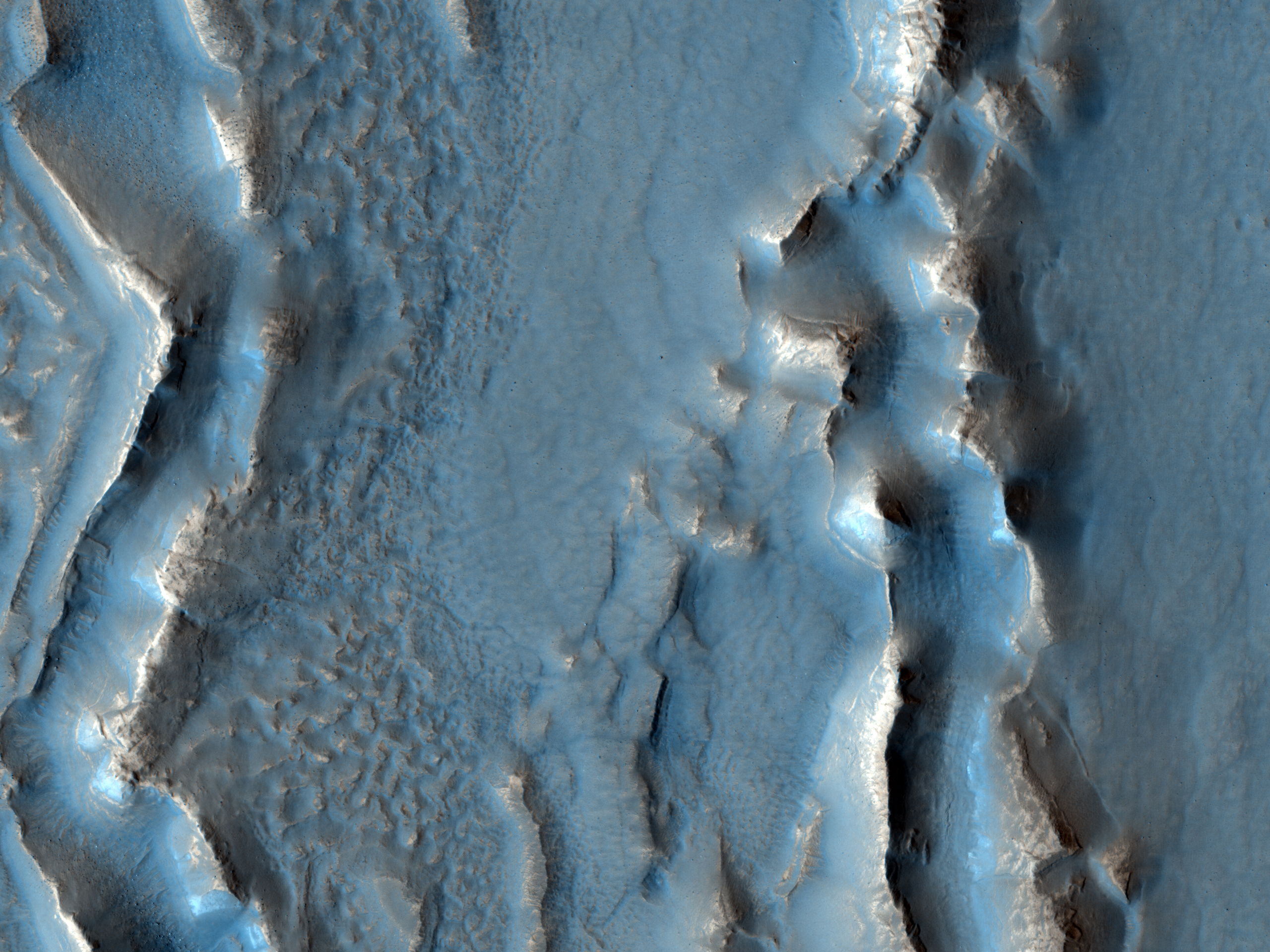
Clicking on this image will take you to the original high resolution HiRISE image.
[See their caption for the image]

Mars Photo of the Day - Jan 10 2012

Today's Image of Mars shows a large depression in Deuteronilus Mensae, a region characterized by glacial features. The depression that is central to this image measures 2000m deep and 110km in diameter from north to south. This depression is eye-catching because it contains darker material than the surrounding terrain. 

In this image you can also see valleys cut deep into the Martian surface. Scientists believe these valleys may have formed from intense melting of water ice, which then quickly froze and flowed down the slopes of the depression, much like a glacier. This was common on Mars when rising magma or impacts resulted in massive amounts of ground water erupting from underground reservoirs, only to be frozen in the frigid Martian temperatures.

At least one glacier in Deuteronilus Mensae formed as recently as 10,000-100,000 years ago. Mars Reconnaissance Orbiter's radar have discovered that part of Deuteronilus Mensae currently contain ice, making the region a possible landing site for any future manned mission to mars.

Clicking on this image will take you to the original high-resolution image from Mars Express. [See the ESA's article on Deuteronilus Mensae]